Types of Aquatic Plants: Names, Examples and How Each One Grows
Water plants are not all the same. Some live completely under the surface, some drift on top, some stand in the shallows with their leaves in the air, and a few barely count as plants at all. If you are choosing plants for a fish tank or a pond, or you simply want to understand the plants in your local lake, it helps to know the main types of aquatic plants and what sets them apart. This guide covers the four growth types with examples, which plants are not really aquatic plants, how to choose for aquariums and ponds, and how to fix common problems.
What are the types of aquatic plants?
There are four main types of aquatic plants: submerged, floating-leaved, free-floating and emergent. They differ in where the roots and leaves sit relative to the water. Examples include hornwort, water lilies, duckweed and cattails. Algae are often grouped with them but are not true plants.
What Is an Aquatic Plant?
An aquatic plant, also called a water plant or macrophyte, is a plant adapted to live in or on water. Some spend their whole lives submerged, and others only keep their roots or the base of the plant wet. In some languages the same idea has its own search terms, such as 水草 in Chinese and Japanese, or “cây thủy sinh” in Vietnamese. Both are commonly used for aquarium and water plants. In Hindi and Urdu, people search for “jalia paudhe”, meaning water plants.
Water changes how a plant lives. Light and gases move differently in water, and there is less need for strong stems. For that reason many aquatic plants have thin, soft leaves, air-filled tissues that help them float, and roots that are small or missing. Floating leaves usually have their breathing pores on the upper surface, while submerged leaves have few or none.
The 4 Main Types of Aquatic Plants
| Type | How it grows | Examples |
|---|
| Submerged | Lives mostly or completely under the water. Most are rooted in the bottom, though some drift unrooted. | Hornwort (coontail), elodea (anacharis), hydrilla, milfoil, vallisneria (tape grass), pondweeds |
| Floating-leaved | Rooted in the bottom, with leaves floating on the surface. | Water lilies, some pondweeds, lotus (often with leaves and flowers held above the water) |
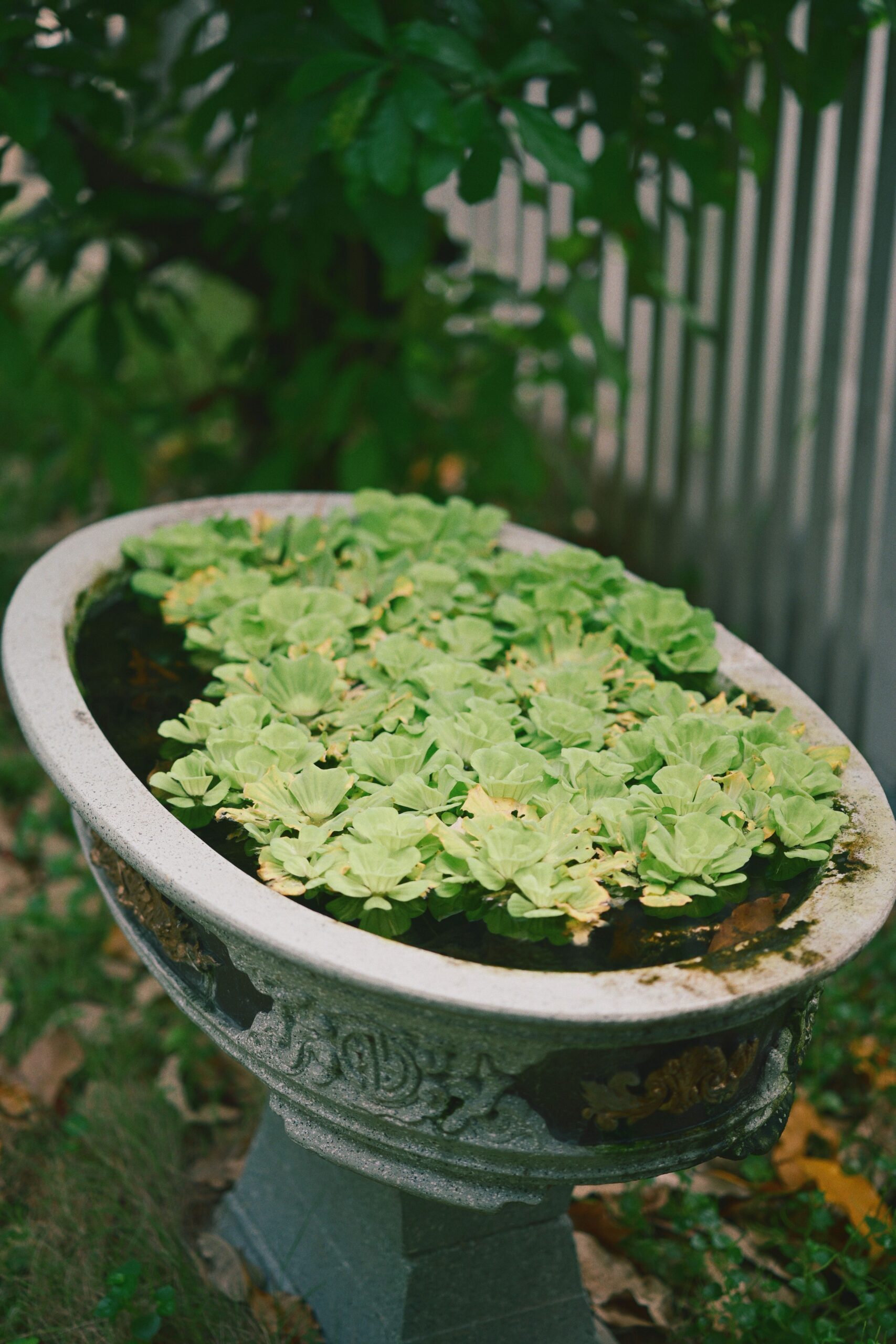
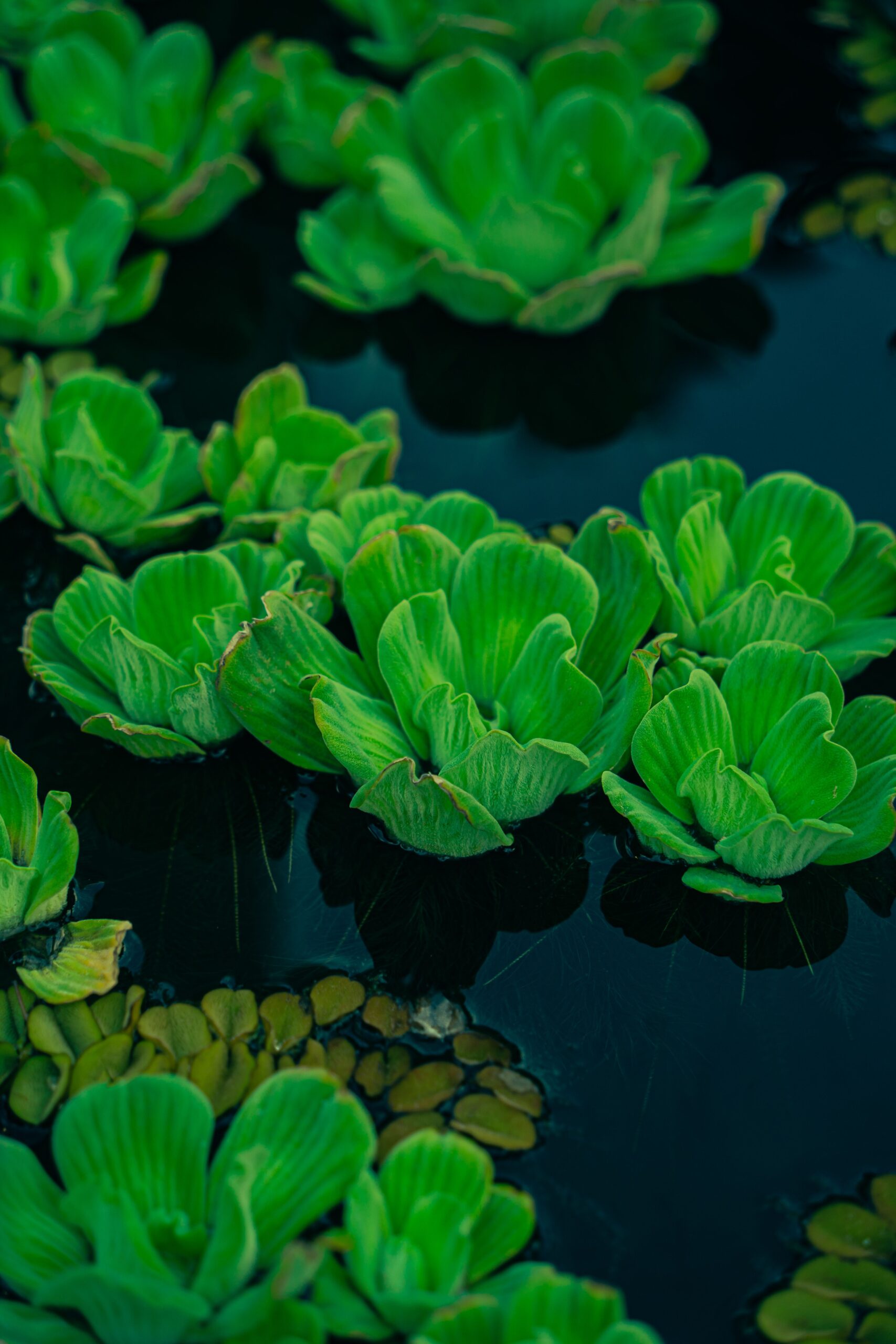
| Free-floating | Not anchored. Drifts on the surface with the wind and current. | Duckweed, water hyacinth, water lettuce, azolla, salvinia, watermeal |
| Emergent | Rooted in shallow water, with most of the leaves and stems standing above it. | Cattails, arrowhead, rushes, sedges, pickerelweed, reeds |
Submerged aquatic plants
These plants add oxygen to the water and give fish and other animals somewhere to shelter, which is why they are popular in tanks and ponds. Hornwort has no real roots, so it can float or be anchored. Vallisneria, or tape grass, grows long ribbon-like leaves from the base. Hydrilla is a submerged plant too, but it is invasive in many places and is not something to release into the wild.
Floating-leaved aquatic plants
Water lilies are the classic example. Their roots sit in the mud and their round leaves rest on the surface, which shades the water and helps keep algae down. Lotus is closely related in looks and habit, but it often lifts its leaves and flowers above the water.
Free-floating aquatic plants
Duckweed, water lettuce and water hyacinth grow quickly and can cover a pond. That makes them useful for taking up nutrients, but also easy to overdo. Water hyacinth, once known as the “terror of Bengal”, has become a serious invasive weed in many warm regions. If someone asks which aquatic plant floats freely and spreads quickly, duckweed and water hyacinth are the usual answers.
Emergent (marginal) aquatic plants
Emergent plants grow along the edges of ponds, lakes and marshes with their roots in wet soil and their leaves held up in the air. Cattails and arrowhead are typical examples. Many grass-like plants, such as rushes and sedges, belong to this group.
Is It Really an Aquatic Plant? Common Questions
- Is a lotus or water lily an aquatic plant? Yes. Both are classic aquatic plants.
- Is duckweed an aquatic plant? Yes. It is a tiny free-floating flowering plant.
- Is algae an aquatic plant? Algae live in water and make food from light like plants do, but they have no true roots, stems or leaves, so they are not true plants. People often list them alongside aquatic plants informally.
- Is seaweed an aquatic plant? Seaweeds such as kelp are large algae. They anchor to rocks with a holdfast, not roots that absorb nutrients.
- Is rice an aquatic plant? Rice is a grass grown in flooded fields. It is usually described as semi-aquatic.
- Is the Himalayan snow lotus an aquatic plant? No. Snow lotus (Saussurea) is a high-altitude alpine plant that grows on rocky mountain slopes, despite the name.
- Is lucky bamboo an aquatic plant? Not really. It is a dracaena that can be kept with its roots in water, which is why it is sometimes called the aquatic plant that looks like bamboo.
- What about kangkong (water spinach)? It is a semi-aquatic leafy vegetable that grows in wet soil or shallow water.
Best Aquatic Plants for an Aquarium
Beginners do best with hardy, low-light plants that do not need CO2 injection. Java fern, anubias, java moss, hornwort, cryptocoryne and amazon sword are the usual starter choices. We list more in our guide to aquatic plants for aquarium setups.
| Plant | Light | Good to know |
|---|
| Java fern | Low | Attach to wood or rock. Do not bury the rhizome. |
| Anubias | Low to medium | Slow-growing and hardy. Same rule: do not bury the rhizome. |
| Java moss | Low to medium | Good for covering wood and rocks. Trim it so it does not get bushy. |
| Hornwort | Low to high | Grows fast and soaks up nutrients. It can be messy. |
| Amazon sword | Medium | A larger background plant. It feeds through its roots, so root tabs help. |
Planting and fertilising basics
- Rhizome plants (java fern, anubias): tie or glue them to hardscape. Burying the rhizome tends to rot the plant.
- Root feeders (swords, cryptocoryne): plant them in the substrate and add a root tab every few months.
- Fertiliser: use a liquid or tablet product labelled aquarium-safe, and start with a low dose.
- Light: a basic LED made for plants is enough for easy species.
- Quarantine new plants: rinse them and keep them apart for a short time before adding them to the main tank, to avoid bringing in pests or snails.
Some aquatic plants have unusual lifestyles. Bladderwort, for example, is a carnivorous water plant. If that interests you, see our guide to the butterwort plant, another carnivorous plant, and our page on air plants for plants that grow without soil.
Aquatic Plants for Ponds
A healthy pond usually combines all three of the main types: submerged plants for oxygen and cover, emergent plants around the edge, and some floating plants for shade. Plant water lilies and lotus in containers with heavy garden loam or aquatic soil, not light potting mix that floats away. Use baskets or pots so you can lift and divide them. Before you buy, check your local rules, since some water plants, such as water hyacinth and hydrilla, are restricted or banned in some areas because they are invasive.
Aquatic Plants Turtles Can Eat
Many turtle owners offer duckweed, anacharis (elodea) and water lettuce as part of the diet or as a floating snack. Needs vary by species, so check what your turtle’s species eats before relying on any plant, and wash plants that come from the wild or from a shop.
Common Aquatic Plant Problems
| Problem | Common causes | What to try |
|---|
| Leaves turning yellow | Nutrient shortage or too little light | Add a gentle fertiliser or root tab and check the light |
| Leaves turning brown | Old leaves, algae coating, or nutrient imbalance | Trim damaged leaves and keep the tank clean |
| Leaves turning clear or “melting” | Often the plant adjusting to new conditions after planting | Trim dead parts and keep conditions stable |
| Plants keep floating | Not anchored, or planted too shallowly | Weigh them down, plant them deeper, or tie them to a rock |
| Plant takes over | Fast growers such as hornwort or duckweed | Trim often and remove extras |
How to Water Plants That Live on Land
Many people searching for “how to water plants” are not looking for water plants at all, but for houseplant watering. The basic rule is simple: check the soil first and water thoroughly only when it has dried to the depth that suits the plant. Succulents and snake plants want it drier, and leafy tropical plants prefer it a bit more even. See our snake plant care and happy plant care guide for examples.
Frequently Asked Questions
What are the 4 types of aquatic plants?
Submerged, floating-leaved, free-floating and emergent. They differ in how the roots and leaves sit in relation to the water.
What are some examples of aquatic plants?
Hornwort, elodea, vallisneria, water lilies, lotus, duckweed, water hyacinth, water lettuce, cattails and arrowhead.
What is the largest aquatic plant?
It depends on how you count. Giant kelp is the largest water-dwelling organism people often compare, but it is algae. Among true plants, giant water lilies produce some of the biggest floating leaves.
What is the easiest aquatic plant for beginners?
Java fern, anubias and java moss are the usual starter plants. They tolerate low light, do not need CO2, and are hard to kill.
Can aquatic plants grow without fish?
Yes. A planted tank with no fish can work, though you still need light, nutrients and clean water.
Why do my aquatic plants keep floating?
They may not be anchored, or they may have been planted too shallowly. Tie them to a rock, use a plant weight, or push the roots deeper into the substrate.
What soil do I use for lotus and water lilies?
Use heavy garden loam or aquatic planting soil in a container, and avoid light potting mixes that float. Do not mix fertiliser into the loose soil near the surface.
What does “jalia paudhe” mean?
It is the Hindi and Urdu term for aquatic or water plants, such as lotus, water lily and water hyacinth.
Ready to Choose Your Aquatic Plants?
Start with our list of easy aquarium plants, then pick a few species that suit your light and space.
See Aquatic Plants for Aquarium
Sources to Review
This article is for general information only. Always check local regulations before buying or planting water plants, and never release aquarium plants or animals into the wild.
0 Comments