Happy Plant
Ammara Azhar
1:20 pm - September 27, 2026
How to Plant Potatoes: The Complete Beginner's Guide (Ground, Bags, Containers & More)
Potatoes are one of the most forgiving crops a beginner can grow, and one of the most confusing to search for — because there's no single "right" way to plant them. Some people grow potatoes straight in garden soil, some use grow bags on a patio, and some are just trying to figure out how to plant potatoes in Minecraft. This guide covers all of it, plus the exact spacing, timing, and fertilizer questions that come up most often.
Affiliate disclosure: this article contains affiliate links. If you purchase through one of them, we may earn a small commission at no extra cost to you.
Quick Answer: What Is the Best Way to Plant Potatoes?
The best way to plant potatoes is to start with certified seed potatoes (not grocery-store potatoes), cut larger ones into chunks with at least one or two "eyes" each, let the cut sides callus over for a day or two, then plant them 3–4 inches deep and about 12 inches apart, in loose, well-draining soil with full sun. Whether that soil is in the ground, a raised bed, or a grow bag matters less than getting the depth, spacing, and drainage right.
How to Grow Potatoes for Beginners: Step-by-Step
- Choose seed potatoes. Use certified seed potatoes from a garden center rather than potatoes from a grocery store, since store potatoes are often treated with a sprout inhibitor and can carry disease.
- Chit or pre-sprout them (optional but helpful). Leave seed potatoes in a cool, bright spot for a couple of weeks before planting so they develop short, sturdy sprouts.
- Cut larger potatoes into pieces. Each piece should have at least one or two eyes. Small seed potatoes (golf-ball sized or smaller) can be planted whole.
- Let cut pieces cure. Leave cut sides exposed to air for 1–2 days so they form a protective callus, which helps prevent rot once planted.
- Plant 3–4 inches deep, 12 inches apart, in rows spaced roughly 2–3 feet apart, with the eyes facing upward.
- Hill the soil as plants grow. Once shoots reach about 6–8 inches tall, mound soil or mulch around the base, leaving the top few inches of foliage exposed. Repeat every few weeks.
- Water consistently. Potatoes need about 1–2 inches of water per week, more during tuber formation.
- Harvest once the foliage yellows and dies back, usually 70–120 days after planting depending on the variety.
What Month Do You Plant Potatoes?
Potatoes are typically planted in early spring, generally 2–4 weeks before your area's last expected frost date, once soil temperature reaches at least 45–50°F (7–10°C). In most temperate regions this falls somewhere between March and April, though warmer climates can plant as early as January or February, and cooler climates may wait until May. A second planting in mid-to-late summer is possible in areas with a long enough growing season before the first fall frost.
Can You Grow Potatoes From a Potato?
Yes — this is exactly how potatoes are normally grown. A whole potato (or a cut piece with at least one eye) will sprout and produce a new plant, which is why the process is often called "growing potatoes from potatoes" rather than growing from true seed. The only caution is that grocery-store potatoes are sometimes treated to prevent sprouting and may carry soil-borne diseases, so certified seed potatoes give more reliable results, especially for beginners.
How to Plant Potatoes From Seed
What most people call "potato seeds" are actually seed potatoes — small whole potatoes or cut pieces used to grow new plants, not true botanical seeds. True potato seeds (the small seeds found in the berries some potato plants produce) exist but are rarely used by home gardeners, since they produce more genetically variable plants and take longer to mature. For nearly all home growing, "planting potatoes from seed" simply means planting seed potatoes as described in the steps above.
Which Fertilizer Is Best for Planting Potatoes?
Potatoes generally do best with a fertilizer that's moderate in nitrogen and higher in phosphorus and potassium, since too much nitrogen encourages leafy growth at the expense of tuber development. A balanced granular fertilizer formulated for root vegetables, or a formulation with a ratio like 5-10-10 or 10-20-20, is commonly recommended. Working aged compost or well-rotted manure into the soil before planting also helps with both nutrition and drainage. Avoid fresh manure, which can encourage scab disease on the tubers.
How Many Potatoes Will I Get if I Plant One Potato?
One seed potato (or one cut piece with an eye) typically produces a single plant that yields somewhere between 5 and 10 usable potatoes, depending on variety, spacing, soil quality, and growing conditions. Under good conditions with consistent watering and proper hilling, some plants can produce more. As a rough planning number, many gardeners estimate roughly 10 times the weight of seed potatoes planted, so a pound of seed potatoes might yield around 10 pounds of harvested potatoes in a good season.
How to Plant Potatoes in the Ground
Planting directly in garden soil is the traditional method and works well if you have loose, well-draining soil and enough space for rows.
- Choose a sunny spot getting at least 6 hours of direct sun daily
- Loosen the soil to about 8–10 inches deep and mix in compost
- Dig trenches 3–4 inches deep, spaced 2–3 feet apart
- Place seed potato pieces 12 inches apart, eyes facing up, and cover with soil
- Hill soil around the stems as they grow to protect developing tubers from sunlight, which causes greening
How to Plant Potatoes in CM (Metric Spacing Guide)
For gardeners working in metric measurements, the same spacing principles apply. Plant seed potatoes about 7–10 cm deep, spaced roughly 30 cm apart within a row, with rows spaced about 60–75 cm apart to leave room for hilling. As shoots reach 15–20 cm tall, mound soil up around the base, leaving the top growth exposed, and repeat as the plant grows taller.
How to Grow Potatoes in a Container
Containers are a good option for small spaces, patios, or gardeners without in-ground beds.
- Choose a container at least 15–20 inches deep with good drainage holes
- Add 4–6 inches of potting mix or compost at the bottom
- Place 2–3 seed potato pieces, eyes up, and cover with 3–4 inches of soil
- As shoots grow, keep adding soil or mulch, leaving only the top leaves exposed, until the container is full
- Water more frequently than in-ground plantings, since containers dry out faster
How to Plant Potatoes in Bags (Potato Grow Bags)
Potato grow bags work on the same "keep adding soil as it grows" principle as containers, but with better drainage and airflow thanks to their breathable fabric construction. They're also easier to store when not in use and simple to dump out at harvest time to collect every tuber.
- Fill the bottom of the bag with 4–6 inches of soil mixed with compost
- Add 2–3 seed potato pieces per 10-gallon bag, eyes facing up
- Cover with a few inches of soil and water well
- As shoots reach 6–8 inches, fold up the sides of the bag and add more soil, leaving the top leaves exposed
- Repeat until the bag is full, then let the plant grow and flower normally
- At harvest, simply tip the bag over onto a tarp to collect the potatoes without digging
If you're setting up a grow-bag potato patch, having a few sturdy, breathable bags on hand makes the whole process easier — especially at harvest time, when a flimsy bag can tear under the weight of soil and tubers.
Cavisoo 10 Gallon Potato Grow Bags (5-Pack)
These are purpose-built for exactly this kind of growing: thick, reinforced fabric bags with a visualization window so you can check on tubers without digging the whole bag out.
- 5 bags included, each 14" x 14" x 18"
- 300g thick non-woven fabric, reusable for multiple seasons
- Reinforced polypropylene handles with X-shaped stitching for carrying full bags
- Strong drainage to prevent waterlogged soil and root circling
- Built-in window to check tuber development before harvest
Check the Current Price on Amazon
JERIA 10 Gallon Grow Bags (12-Pack)
If you're planting several potato bags at once — or want extras for tomatoes and other vegetables — this larger multipack offers more bags per dollar and comes in multiple sizes.
- 12 bags included, each 16" diameter x 12" height, plus 12 plant labels
- 300g thickened non-woven fabric for durability and breathability
- Reinforced handles for easy moving between sun and shade
- Foldable for compact off-season storage
- Also available in 3, 5, 7, 15, 20, 25, and 30-gallon sizes
See the Available Sizes on Amazon
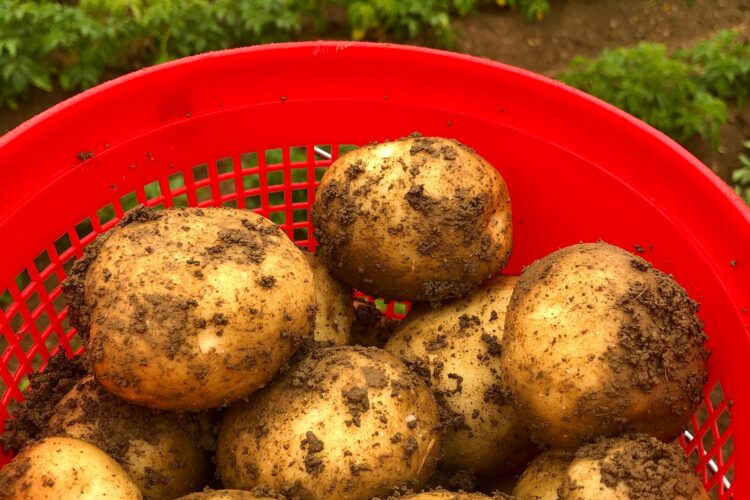
How to Plant Potatoes in a Bucket or Laundry Basket
Buckets and laundry baskets work as budget alternatives to purpose-made grow bags, using the same layering method. For a bucket, drill several drainage holes in the bottom first. For a laundry basket, line the inside loosely with landscape fabric or a feed sack to hold soil in while still allowing drainage through the basket's existing holes. From there, follow the same steps as container growing: a few inches of soil, seed potatoes with eyes up, and gradually add soil as the plant grows.
How to Plant Sprouting Potatoes
A potato that's already sprouted in your pantry isn't wasted — it can be planted as-is. Cut larger sprouted potatoes into pieces, making sure each piece has at least one healthy sprout or eye, and let the cut sides callus for a day before planting at the same 3–4 inch depth as fresh seed potatoes. Small sprouted potatoes can be planted whole. The main caveat is that grocery-store potatoes may be treated to resist sprouting or may carry disease, so results can be less predictable than with certified seed potatoes.
How to Plant Potatoes That Have Sprouted With Eyes
"Eyes" are the small indentations on a potato's skin where sprouts emerge — every piece you plant needs at least one intact eye to grow into a plant. When cutting a sprouted or eyed potato into pieces, aim for pieces roughly the size of a golf ball or larger, each with one or two eyes, and plant with the eyes and sprouts facing upward so new growth doesn't have to fight its way around the tuber to reach the surface.
How to Plant Potatoes in Minecraft
In Minecraft, potatoes are planted the same way as most crops in the game: till a block of dirt or grass with a hoe, then right-click the tilled soil while holding a potato item to plant it. Potatoes need nearby water and light to grow through their four growth stages and can be planted on farmland just like wheat seeds or carrots. Villagers occasionally drop potatoes, and they can also be found in village farms, making them one of the easier crops to acquire early in a playthrough.
Comparison: Ways to Plant Potatoes
| Method | Best For | Space Needed | Drainage | Harvest Ease |
|---|---|---|---|---|
| In the ground | Larger gardens, bigger harvests | High | Depends on soil type | Requires digging |
| Raised bed / container | Small gardens, patios | Medium | Good, if holes present | Moderate digging |
| Grow bags | Patios, balconies, easy harvest | Low | Excellent (fabric breathes) | Just tip and pour out |
| Bucket / laundry basket | Budget growers, small spaces | Low | Good, with drilled holes | Moderate, tip if possible |
People Also Ask
What is the best way to plant potatoes?
The most reliable method for most home gardeners is using certified seed potatoes, planted 3–4 inches deep and 12 inches apart in loose, well-draining soil, then hilling soil around the stems as the plant grows. This works whether you're planting in the ground, a raised bed, a container, or a grow bag.
Can you grow potatoes from a potato?
Yes, this is the standard way potatoes are grown. A whole small potato or a cut piece with at least one eye will sprout into a new plant, which is why seed potatoes (not true botanical seeds) are used for almost all home potato growing.
How many potatoes will I get if I plant one potato?
A single seed potato typically produces one plant yielding roughly 5–10 potatoes, though this varies with variety, spacing, and growing conditions. A common rule of thumb is expecting about 10 times the weight of seed potatoes planted by harvest time.
Which fertilizer is best for planting potatoes?
A fertilizer lower in nitrogen and higher in phosphorus and potassium — such as a 5-10-10 or 10-20-20 blend — generally produces better tuber development than a high-nitrogen fertilizer, which pushes leafy growth instead.
What month do you plant potatoes?
Most regions plant potatoes in early spring, about 2–4 weeks before the last expected frost, once soil temperature reaches roughly 45–50°F (7–10°C). Exact timing varies by climate, ranging from as early as January in warm regions to May in cooler ones.
How do you plant potatoes at home without buying seed potatoes?
You can plant a sprouted or eyed potato from your own kitchen, cut into pieces with at least one eye per piece, cured for a day before planting. Results are generally less predictable than certified seed potatoes, since grocery-store potatoes may be treated to resist sprouting or carry soil-borne disease.
People Also Search For
- How to plant potatoes in a bucket — Drill drainage holes, add soil, plant seed pieces eyes-up, and keep adding soil as shoots grow.
- How to plant potatoes with eyes — Cut pieces so each has at least one eye, cure for a day, then plant eyes facing upward.
- How to plant potatoes in a grow bag — Layer soil, add seed potatoes, and keep folding up the sides with more soil as the plant grows.
- How to plant potatoes that are sprouting — Cut around healthy sprouts, let the cuts callus, then plant like any other seed potato.
- How to plant potatoes in a laundry basket — Line the basket to hold soil in, then follow the same layering method as a container.
- How to plant potatoes in Minecraft — Till soil with a hoe near water, then right-click the farmland while holding a potato.
- How to plant tomatoes — Bury seedlings deep up to their first leaves in warm soil, then stake or cage as they grow.
- How to plant garlic — Split a bulb into cloves and plant each one pointy-end up, about 2 inches deep, in fall.
Final Thoughts
However you plant them — straight in the garden, in a container on a patio, or in a dedicated grow bag — potatoes reward pretty simple care: good drainage, consistent watering, and hilling the soil as they grow. If space or soil quality is your main obstacle, a grow bag is usually the easiest starting point, since it solves drainage automatically and makes harvest as simple as tipping the bag over.
Ready to start your potato patch? Pick up a set of grow bags, choose a sunny spot, and get your seed potatoes chitting a couple of weeks before your region's planting window opens.

Ammara Azhar
I'm Ammara Azhar, the founder of HappyPlant.info and a content writer passionate about creating clear, well-researched content on plant care, gardening, and lifestyle topics. I enjoy turning reliable information into practical, easy-to-follow guides that help readers care for their plants with confidence. My writing focuses on accuracy, simplicity, and providing genuine value. Through thoughtful research and engaging content, I aim to make gardening more accessible and enjoyable for beginners and experienced plant lovers alike.
0 Comments