Cotton Plant: What It Looks Like, How It Grows, and Why It Matters
The cotton plant is one of the most widely grown crops in the world, yet most people have never seen one up close or know how a fluffy boll of fiber actually forms on a plant that starts out looking like a hibiscus relative. This guide covers what a cotton plant actually is, what it looks like at each growth stage, its scientific name and origins, how it's planted, and the most common questions people search about it — from "is cotton a plant?" to its uses beyond fabric.
Quick Answer: What Is a Cotton Plant?
A cotton plant is a shrubby, flowering plant in the genus Gossypium, grown commercially for the soft fiber that forms around its seeds inside a seed pod called a boll. It produces pale yellow or cream flowers that turn pink before falling off, leaving behind a green boll that splits open when mature to reveal the white, fluffy cotton fiber used in textiles.
Is Cotton a Plant?
Yes, cotton is a plant — specifically a flowering shrub, not a tree or a synthetic material. It belongs to the mallow family (Malvaceae), the same family as hibiscus and okra, which is part of why cotton flowers resemble hibiscus blooms. The fiber harvested for textiles grows naturally around the plant's seeds as a way to help them disperse in the wind.
Cotton Plant Scientific Name
The cotton plant's scientific name depends on the species, since several species are cultivated commercially:
- Gossypium hirsutum — upland cotton, accounting for the vast majority of the world's cotton production
- Gossypium barbadense — extra-long staple cotton, including Pima and Egyptian cotton varieties
- Gossypium arboreum and Gossypium herbaceum — Old World species grown on a smaller scale, mainly in Asia and Africa
Across all species, the genus name is simply Gossypium, which is the term most often used in botanical and agricultural references.
What Does a Cotton Plant Look Like?
A mature cotton plant typically grows 3 to 5 feet tall, with broad, lobed green leaves similar in shape to a maple leaf, and a central woody stem that branches outward as the plant matures. Depending on the stage of growth, a cotton plant can look quite different:
- Young cotton plant: A small seedling with two rounded cotyledon leaves, followed by true lobed leaves as it establishes itself over the first several weeks.
- Flowering stage: Cream or pale yellow flowers open for about a day, then turn pink to red before wilting and falling away.
- Boll stage: After the flower drops, a green, walnut-sized seed pod called a boll develops in its place.
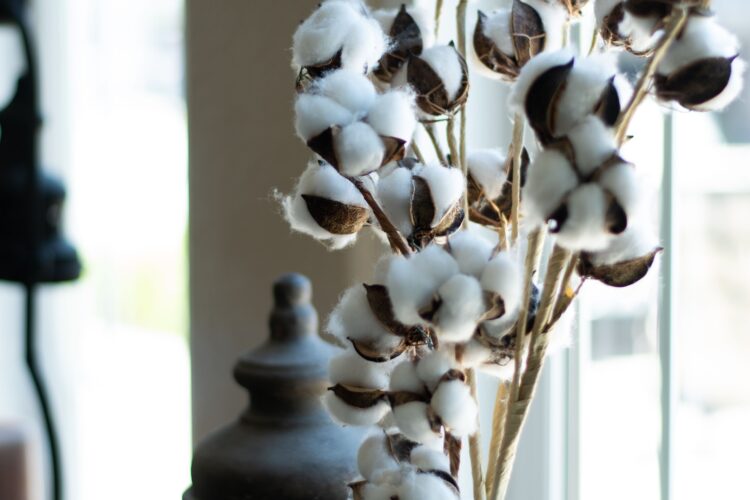
- Mature boll: The boll dries out and splits open into four or five segments, revealing the familiar white, fluffy cotton fiber packed around the seeds.
If you've searched for a cotton plant drawing or illustration, most botanical diagrams show these four stages side by side, since the transformation from flower to open boll is one of the most recognizable parts of the plant's life cycle.
Cotton Plant Flower
The cotton plant flower is one of its most overlooked features, since most people associate cotton with the fiber rather than the bloom that precedes it. Flowers emerge singly along the branches, with five petals that start out a pale cream or yellow color. Within a day of opening, the petals shift to a deeper pink and then red as the flower ages, a color change caused by a natural pH shift in the petal tissue. The flower is pollinated primarily by bees, and once pollination is complete, the petals drop and the boll begins forming at the base where the flower was attached.
Cotton Plant Leaves
Cotton plant leaves are broad, palmately lobed — meaning they spread outward from a central point like fingers on a hand — and typically have three to five lobes per leaf. They're a deep green color and provide the photosynthesis needed to support boll development through the growing season. In some ornamental or heirloom varieties, leaf color can lean more reddish or burgundy, which is one reason cotton occasionally shows up as a decorative landscaping plant rather than strictly a farm crop.
Cotton Plant: Tree or Shrub?
A cotton plant is a shrub, not a tree, despite sometimes being referred to informally as a "cotton tree." Commercial cotton is an annual or short-lived perennial shrub that's replanted each growing season in most farming regions. The confusion partly comes from an unrelated plant, the silk cotton tree (Ceiba pentandra or the related kapok tree), which does grow as a large tree and produces a different type of fluffy seed fiber used for stuffing rather than textile-grade cotton fiber.
Cotton Growth Stages
Cotton generally moves through five recognizable growth stages from planting to harvest:
- Germination and emergence — seeds sprout and push through the soil, typically within 5–10 days under good conditions
- Seedling establishment — the young plant develops true leaves and begins building its root system
- Vegetative growth — the plant branches out and grows taller, building the structure that will support flowers and bolls
- Flowering (squaring and blooming) — flower buds called squares form, open into blooms, and are pollinated
- Boll development and maturation — bolls form, fill out, and eventually dry and split open, signaling the plant is ready for harvest
The full cycle from planting to harvest generally takes around 150 to 180 days, depending on climate, variety, and growing conditions.
How to Plant Cotton
Cotton is typically grown as a warm-season annual crop, planted once soil temperatures are consistently warm enough to support germination.
- Choose well-draining, fertile soil in a location that gets full sun for most of the day.
- Wait for warm soil — cotton seeds need soil temperatures of roughly 60°F (16°C) or higher to germinate reliably.
- Plant seeds about 1 inch deep, spaced several inches apart within rows, with rows spaced wide enough to allow airflow and room for the plant to branch out.
- Water consistently during germination and early growth, then reduce once the plant is established, since cotton is relatively drought-tolerant once rooted.
- Monitor for pests such as boll weevils and aphids, which are among the most common challenges in cotton cultivation.
- Allow bolls to fully mature and dry before harvesting, since picking too early results in fiber that hasn't fully developed.
How to Plant Cotton Seeds
Cotton seeds are typically planted directly into the ground rather than started indoors and transplanted, since cotton doesn't generally handle transplant stress well. Plant seeds roughly 1 inch deep into warm, moist soil, and keep the soil consistently damp until germination occurs, usually within one to two weeks. Home growers interested in cotton as a novelty or ornamental plant can follow the same basic process on a smaller scale, though commercial cotton seed is sometimes treated with chemicals, so untreated seed is the better choice for home gardens.
Cotton Plant Uses
Cotton's primary use is textile fiber, but the plant offers more than fabric:
- Textiles and clothing — the dominant use, from everyday apparel to home textiles like towels and bedding
- Cottonseed oil — extracted from the seeds and used in cooking oil, margarine, and some processed foods
- Cottonseed meal — a byproduct used as livestock feed
- Paper and currency — cotton fiber (often cotton linters, the shorter fibers left after the main harvest) is used in specialty papers, including some currency paper
- Medical and hygiene products — cotton balls, swabs, and gauze
- Ornamental and decorative use — dried cotton stems with open bolls are commonly used in wreaths, floral arrangements, and home decor, which is part of why cotton plant imagery is so widely searched and shared
10 Uses of Cotton (Quick List)
- Clothing and apparel fabric
- Bedding, towels, and home textiles
- Cottonseed oil for cooking
- Livestock feed from cottonseed meal
- Medical gauze, bandages, and cotton swabs
- Specialty and currency paper
- Fishing nets and industrial threads
- Coffee filters
- Decorative wreaths and floral arrangements
- Automotive interior padding and upholstery
Cotton Plant Medicinal Uses and Cotton Leaf Tea
Traditional and folk medicine in some cultures has used parts of the cotton plant — including the root bark and leaves — for purposes ranging from managing menstrual discomfort to acting as a mild astringent. Cotton leaf tea specifically has circulated in some traditional wellness practices, but there isn't strong, well-established clinical research confirming safety or effectiveness for these uses, and cotton root bark in particular has historically been associated with uterine-stimulating effects. Anyone considering cotton-based herbal remedies, especially during pregnancy, should speak with a doctor first rather than relying on folk use alone.
Where Did Cotton Originate?
Cotton cultivation has independent origins in multiple regions of the world. Archaeological evidence points to cotton being domesticated separately in the Indus Valley (modern-day India and Pakistan), in Mesoamerica, and in parts of Africa, with some of the earliest evidence dating back several thousand years. The specific species grown today reflect these separate origins — Gossypium arboreum and Gossypium herbaceum trace back to Old World domestication in Asia and Africa, while Gossypium hirsutum and Gossypium barbadense originate from the Americas.
Cotton Plant vs. Other Fiber Plants
Cotton isn't the only plant grown for fiber, and it's often compared to a few others:
| Plant | Fiber Source | Common Use |
|---|
| Cotton (Gossypium) | Fiber around the seed, inside the boll | Textiles, clothing |
| Flax plant | Fiber from the stem | Linen fabric, linseed oil |
| Wheat plant | Not a fiber crop (grain crop) | Food, flour, straw byproduct |
| Silk cotton tree (Ceiba/kapok) | Fiber from seed pods on a tree | Stuffing, insulation (not spun into thread) |
The flax plant is the closest comparison in terms of use, since it's also spun into cloth (linen), but it's harvested from the stem rather than a seed boll, and it belongs to a completely different plant family than cotton.
Serena Williams and the Cotton Plant Controversy
Serena Williams has spoken publicly about her family's history connected to cotton farming in the American South, and related commentary and media coverage have circulated discussing cotton's historical association with slavery in the United States. Cotton production in the American South before and during the Civil War relied heavily on enslaved labor, and that history remains an important part of understanding cotton's broader cultural and economic legacy in the U.S., separate from its agricultural or botanical characteristics.
Cotton Plant, Arkansas
Cotton Plant is also the name of a small city in Woodruff County, Arkansas, named for the crop that historically dominated the region's agricultural economy. It's a notable stop for music history enthusiasts, as it's recognized as the birthplace of blues musician Louis Jordan, and it reflects how deeply cotton farming shaped place names and local identity across the American South.
Common Misconceptions About the Cotton Plant
- "Cotton grows on a tree." It doesn't — cotton is a shrub. The confusion often comes from the unrelated silk cotton tree, which produces a different kind of fiber.
- "Cotton bolls are white when they form." Bolls are green while developing and only reveal white fiber once they dry out and split open at maturity.
- "All cotton fiber is the same quality." Fiber length and quality vary significantly by species and growing conditions — extra-long staple varieties like Pima cotton are considered higher quality than standard upland cotton.
Frequently Asked Questions
What is a cotton plant called?
A cotton plant is scientifically known by its genus name, Gossypium, with the most widely cultivated species being Gossypium hirsutum. In everyday language, it's simply called a cotton plant or cotton shrub.
Can I grow a cotton plant at home?
Yes, cotton can be grown at home in warm climates or as a potted ornamental plant, as long as it gets full sun, warm soil for germination, and a long enough growing season (generally 150+ frost-free days) to reach maturity and produce bolls.
What does a cotton plant look like?
A cotton plant is a shrub roughly 3 to 5 feet tall with broad, lobed green leaves, pale yellow or cream flowers that turn pink before dropping, and green seed pods called bolls that split open to reveal white, fluffy fiber when mature.
Is cotton a plant or a tree?
Cotton is a flowering shrub, not a tree. It's sometimes confused with the unrelated silk cotton tree, which does grow as a large tree but produces a different type of seed fiber.
What is the cotton plant's scientific name?
The cotton plant belongs to the genus Gossypium, with Gossypium hirsutum being the most commonly cultivated species worldwide, followed by Gossypium barbadense for extra-long staple varieties like Pima cotton.
How long does it take a cotton plant to grow from seed to harvest?
Cotton typically takes around 150 to 180 days from planting to harvest, passing through germination, vegetative growth, flowering, and boll maturation before the bolls dry and split open.
What are the main uses of the cotton plant besides fabric?
Beyond textiles, cotton is used for cottonseed oil, livestock feed from cottonseed meal, medical products like gauze and cotton swabs, specialty paper, and decorative dried-stem arrangements.
Final Thoughts
The cotton plant is far more interesting than the finished fabric most people associate it with — a flowering shrub whose blooms change color in a single day, whose seed pods split open into one of the most recognizable natural fibers on earth, and whose history runs through agriculture, trade, and difficult chapters of human history alike. Whether you're researching it for a school project, considering growing it as a novelty plant, or just curious what that fluffy white boll actually comes from, understanding its growth cycle and botanical background fills in a surprising amount of context behind an everyday material.
If plants and their growth cycles interest you more broadly, our guides on how plants make you happy and houseplants and wellbeing explore the connection between people and the plants they grow. Have a question about this guide or want to suggest a topic? Get in touch with our team, or learn more about our site.

0 Comments