Plants Inside a Terrarium: Best Options, Setup Tips, and What to Avoid
Choosing the right plants inside a terrarium is the difference between a display that thrives for years and one that turns to mush in a few weeks. Not every houseplant tolerates the humidity, limited airflow, and enclosed space of a glass container — and picking the wrong combination is the single most common reason a first terrarium fails.
This guide walks through which plants in a terrarium actually work, how growing plants in a terrarium differs depending on whether it's open, closed, or bottle-shaped, and where to source live tropical, miniature, exotic, and reptile-safe plants. Along the way, we'll point out a few terrarium containers and kits worth considering if you're setting one up from scratch.
Affiliate disclosure: this article contains affiliate links. If you purchase through one of them, we may earn a small commission at no extra cost to you. We haven't personally tested every product listed; the details below are drawn from the manufacturers' own listings and customer rating data at the time of writing.
Can Any Plant Survive Inside a Terrarium?
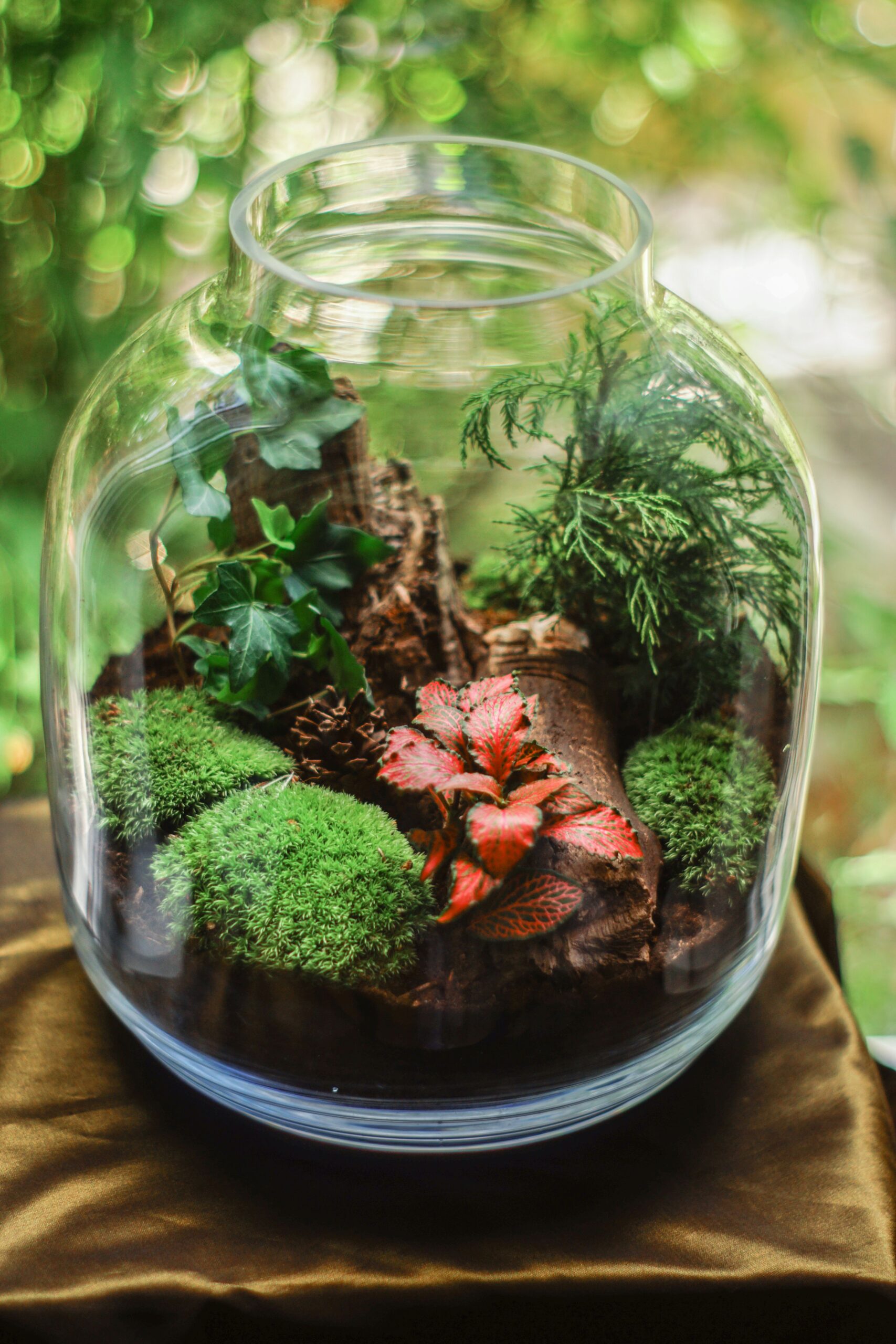
No — not every plant can survive inside a terrarium. Plants that need dry soil and strong airflow, like most cacti grown outdoors or plants prone to fungal issues in still, humid air, generally struggle in a closed or semi-closed glass environment. Plants that naturally grow in humid, low-light forest floor conditions — mosses, ferns, fittonia, and many tropical species — are the ones that genuinely thrive as plants inside a terrarium.
Plants in a Terrarium: Open, Closed, and Bottle Setups
The type of container changes which plants in a terrarium will actually do well, so it's worth deciding on the format before buying any plants.
| Terrarium Type | Humidity | Best Plants Inside a Terrarium |
|---|
| Open glass terrarium | Low–moderate | Succulents, air plants, cacti |
| Closed terrarium | High, self-sustaining | Ferns, moss, fittonia, carnivorous plants |
| Bottle terrarium | Very high, minimal exchange | Slow-growing moss, small ferns, fittonia |
Plants in a bottle terrarium in particular need to be slow-growing and humidity-tolerant, since a narrow-necked bottle offers very little airflow and almost no room to prune or thin out anything that outgrows its space.
Best Plants in a Terrarium by Type
Air Plants in a Terrarium
Air plants (Tillandsia) don't need soil at all, which makes them one of the simplest plants in a glass terrarium for beginners. Live air plants absorb moisture and nutrients through their leaves, so they suit open glass vessels, hanging terrarium jars, and glass terrarium holders with good air circulation rather than a sealed, humid bottle. Top-rated live air plants are usually sold in small clusters or bundles, often under $10 each, and can simply be nestled among rocks or moss rather than planted in substrate.
A wooden-stand terrarium with open glass bulbs is a practical way to display air plants or small trailing cuttings on a desk or shelf:
XXXFLOWER Plant Terrarium with Wooden Stand (3 Bulb Vase) — a natural wood frame holding three heat-resistant glass bulb vases on a metal swivel rod, which makes it easy to reposition or refresh what's inside. It works well as an air plant terrarium display or for small water-rooted cuttings, though it's an open design rather than a closed, high-humidity terrarium. Plants are not included.
Check the Current Price on Amazon
Carnivorous Plants in a Terrarium
Carnivorous plants in a terrarium — Venus flytraps, sundews, and smaller pitcher plants — need consistently high humidity, bright light for several hours a day, and nutrient-poor substrate like sphagnum moss rather than regular potting soil. A closed or mostly-closed glass terrarium with a built-in grow light solves two of the biggest challenges at once: humidity and consistent light exposure.
AREPK Desktop Glass Plant Terrarium with Grow Light (Large, 7.8"L x 7.8"W x 14"H) — a rimless, low-iron glass tank with a 10W LED grow light on a timer, plus a rotating vent that lets you dial in humidity for moss and carnivorous plants specifically. The hollow, floating-style base is more of a decorative touch, but the adjustable ventilation and auto on/off timer are the features that actually matter for keeping carnivorous plants and moss alive without daily attention. Watering is needed only about once a week.
See the Available Options on Amazon
For a smaller desk footprint, the same brand also makes a compact cylindrical version:
AREPK Desktop Glass Plant Terrarium with Grow Light (Compact, H7.8" x D4") — the same 5W LED grow light and rotating humidity vent in a narrower cylinder shape, better suited to a small desk corner or a shelf where the larger tank won't fit. It's a reasonable starting point if you want to try growing plants in a terrarium with supplemental light before committing to a larger setup.
Compare Pricing on Amazon
Succulent Plants in a Terrarium
Succulents need the opposite conditions from moss and ferns — good airflow, brief drying periods between waterings, and no standing water at the roots. A house-shaped glass terrarium with a hinged lid, rather than a sealed bottle, is a better match: you can leave the lid propped for ventilation and close it only when you want to display the piece.
A large house-shaped glass terrarium with a swing lid (roughly 9.8" x 7.9" x 5.9", black metal frame) is built specifically for this kind of light-watering setup — it's designed for layered moss, succulents, small ferns, or air plants rather than standing water, and the hinged top makes it easy to reach in for misting and general upkeep. It doesn't include plants, soil, or stones, so you'll want to pick those separately based on the specific plants inside the terrarium you're building.
Tropical and Miniature Plants in a Closed Terrarium
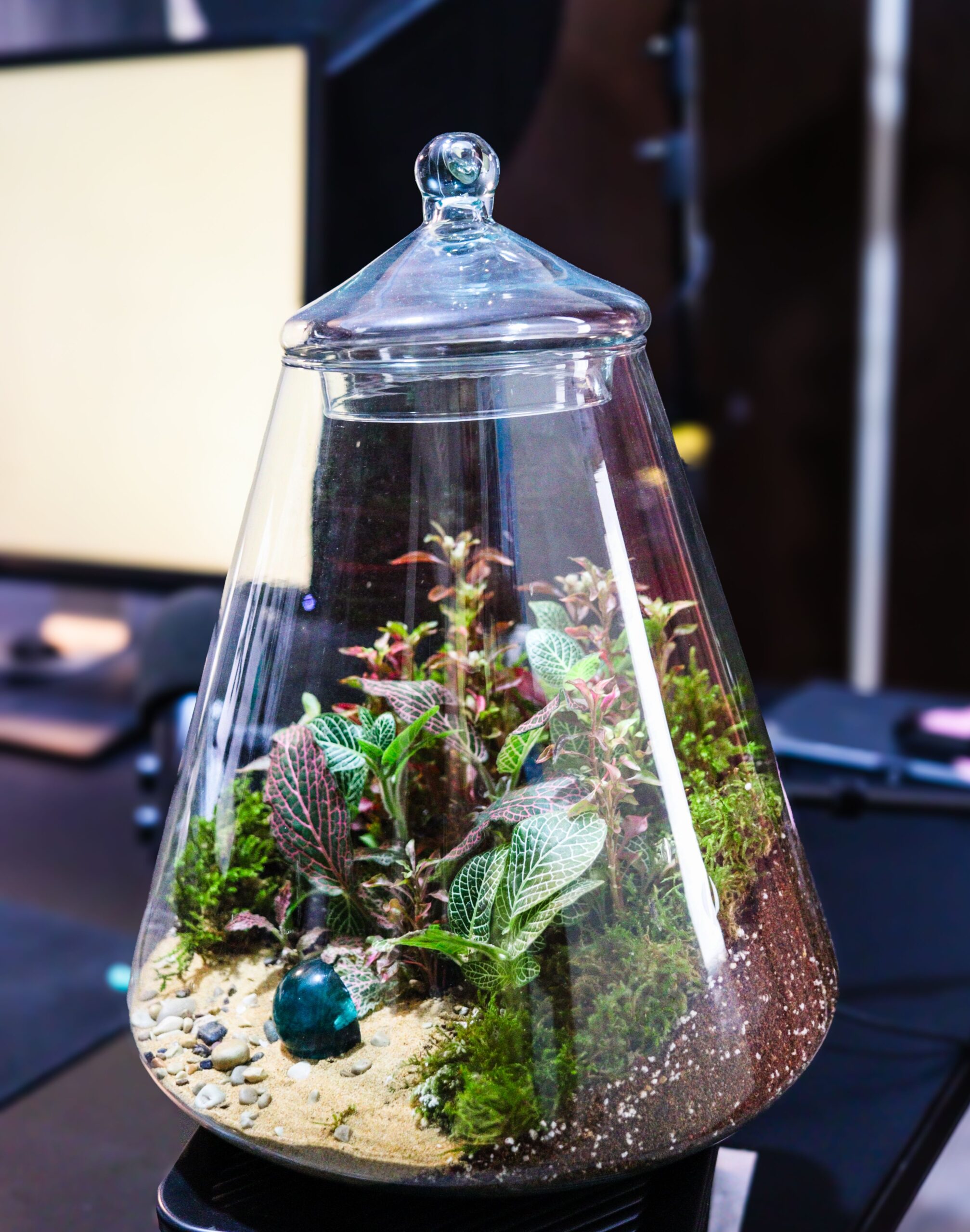
Closed terrarium plants — fittonia, miniature ferns, small-leafed pothos, moss, and compact tropical foliage — are the plants most people picture when they think of a classic sealed glass terrarium. These plants in a closed terrarium benefit from the self-sustaining humidity cycle: water transpires from the leaves, condenses on the glass, and drips back down, often requiring little to no watering for weeks at a time.
If you're looking for exotic tropical plants for sale or want a wider selection of live tropical terrarium plants than a general garden center carries, specialty online plant sellers are usually a better source than big-box retailers:
Browse Tropical Terrarium Plants
For genuinely miniature terrarium plants sized for small bottle terrariums and nano setups:
View Miniature Terrarium Plants
And for less common, exotic terrarium plant varieties beyond the usual pothos-and-fern lineup:
Shop Exotic Terrarium Plants
Live Plants for Reptile Terrariums
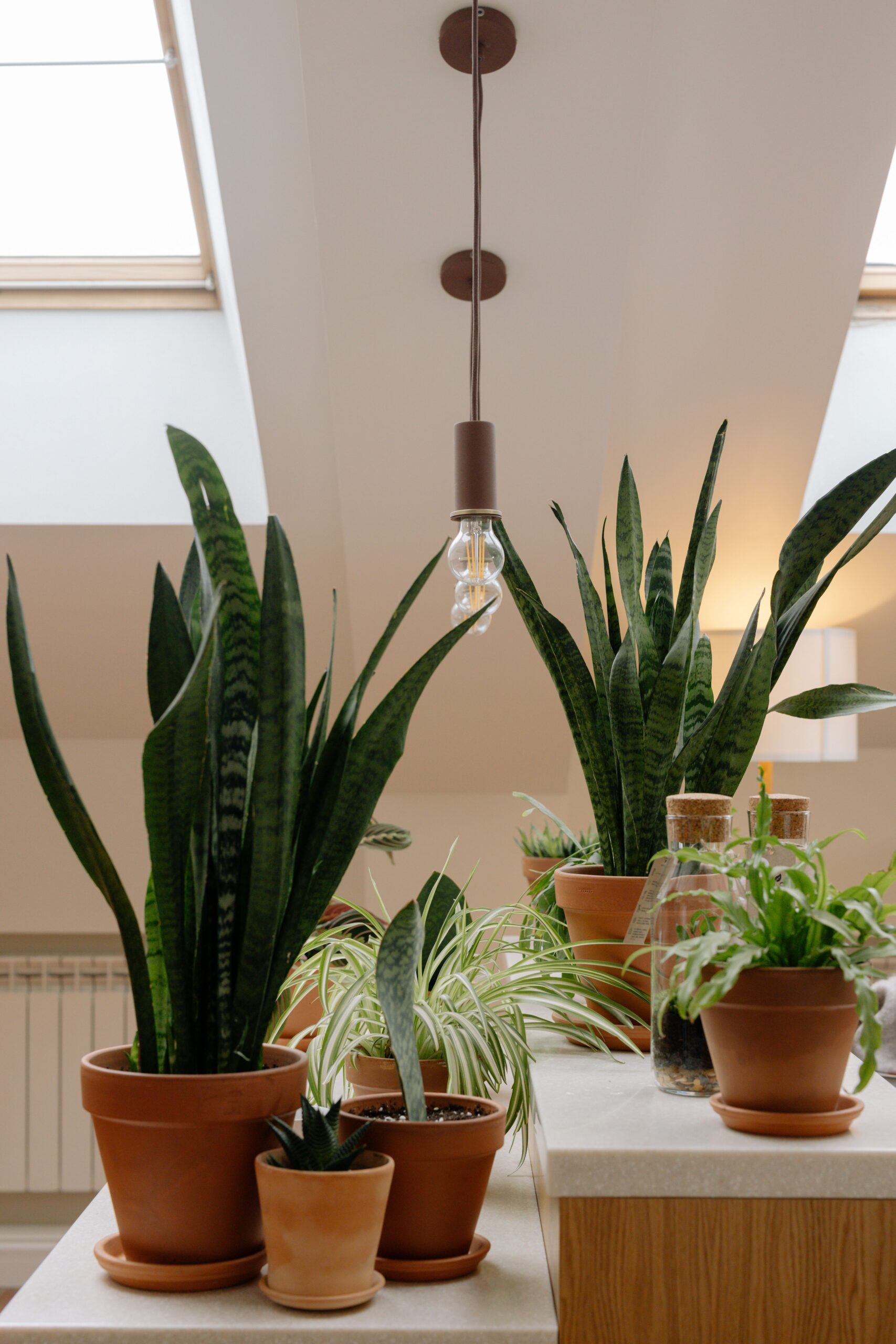
Live reptile plants for sale need to meet a different bar than decorative terrarium plants: they have to hold up to digging, basking heat, and occasional chewing, and they can't be toxic to the species living in the enclosure. Pothos, snake plants, and certain philodendrons are commonly used because they tolerate handling and humidity swings better than delicate tropical foliage. Always confirm a plant is safe for your specific reptile species before adding it, since toxicity varies widely between species.
Check Live Reptile Plants on Amazon
How to Set Up Plants Inside a Terrarium (DIY Steps)
A plants inside a terrarium diy setup follows the same basic layering approach regardless of container shape:
- Add a drainage layer. Small pebbles or gravel at the bottom, about 1–2 inches deep, give excess water somewhere to go besides the roots.
- Add activated charcoal. A thin layer helps prevent mold and odor, which matters more in a closed or bottle terrarium than an open one.
- Add substrate. Use a moisture-retentive mix for closed/tropical plants, or a fast-draining succulent mix for open, drier setups.
- Position your plants. Place taller plants toward the back or center, leaving room between them so they're not competing for light and space immediately.
- Add moss or decorative rock. This fills gaps, helps retain moisture where needed, and gives the display a finished look.
- Water lightly and check condensation. Mist rather than pour for closed terrariums, then watch the glass over the next day or two — heavy, constant fogging means it's too wet.
- Adjust airflow. Crack the lid or loosen the cap if condensation doesn't clear, or add a light mist if the substrate looks dry.
Terrarium Plants for Beginners
If you're new to this, start with plants that forgive inconsistent watering and adapt to a range of light levels:
- Pothos — tolerant of both open and closed terrariums
- Fittonia (nerve plant) — thrives in high humidity, good for a closed terrarium
- Air plants — no soil needed, ideal for open glass displays
- Moss — extremely low-maintenance in a closed or bottle terrarium
- Baby's tears — a low, mossy groundcover that fills space quickly
What Not to Put in a Terrarium
- Plants with very different water needs together. A cactus and a fern want opposite humidity levels — combining them means one will suffer no matter how you manage the terrarium.
- Fertilizer around carnivorous plants. These plants get nutrients from prey, and standard fertilizer can damage their roots.
- Garden soil straight from outside. It can introduce pests, fungus, or weed seeds into an enclosed environment where there's no natural predator or airflow to keep them in check.
- Fast-growing vines in a small bottle terrarium. Vigorous growers will outgrow a narrow-necked bottle quickly and become difficult to prune once they're established.
- Standing water at the base. Most terrarium plants need moist, not waterlogged, substrate — a drainage layer is there to prevent roots from sitting directly in water.
Frequently Asked Questions
What are good plants to put in a terrarium indoors?
Good plants inside a terrarium for indoor use include pothos, fittonia, ferns, moss, and air plants, since they tolerate the humidity and lower light levels typical of an enclosed glass container. Which specific plants work best depends on whether the terrarium is open, closed, or bottle-shaped.
What not to put in a terrarium?
Avoid mixing plants with opposite water and humidity needs, using outdoor garden soil, adding fertilizer around carnivorous plants, or planting fast-growing vines in a small bottle terrarium where they'll quickly outgrow the space.
What are some good plants to use in a terrarium?
Fittonia, moss, small ferns, air plants, and pothos are consistently reliable choices. For a closed terrarium, prioritize humidity-loving species; for an open terrarium, succulents and air plants are a better fit.
Can any plant survive in a terrarium?
No. Plants that need strong airflow and dry soil, such as most outdoor cacti, typically don't do well in an enclosed or semi-enclosed terrarium. Plants adapted to humid, low-light conditions are the ones that genuinely thrive as terrarium plants.
Do plants in a terrarium grow?
Yes, plants in a terrarium continue to grow, sometimes more slowly than in open air due to lower light levels, and sometimes vigorously if humidity and light are well matched to the species. Closed terrarium plants may need occasional trimming to keep them from outgrowing the container.
Where can I buy terrarium plants online or near me?
Specialty online plant retailers typically offer a wider range of tropical, miniature, and exotic terrarium plants than local garden centers, while local nurseries are useful for inspecting plant health in person before buying. Reptile-specific plants and terrarium containers are also commonly available through online marketplaces.
Final Thoughts
The plants inside a terrarium only thrive when they're matched to the container type and to each other's humidity and light needs — that single decision matters more than the container's price or style. Whether you're setting up a closed terrarium for moss and ferns, an open display for air plants, or a grow-light tank for carnivorous plants, start with the plant requirements first and choose the container second.
Ready to build your setup? Compare the terrarium containers and live plant options above based on the type of plants inside a terrarium you want to grow — or reach out if you'd like help matching a specific plant to the right container.

0 Comments