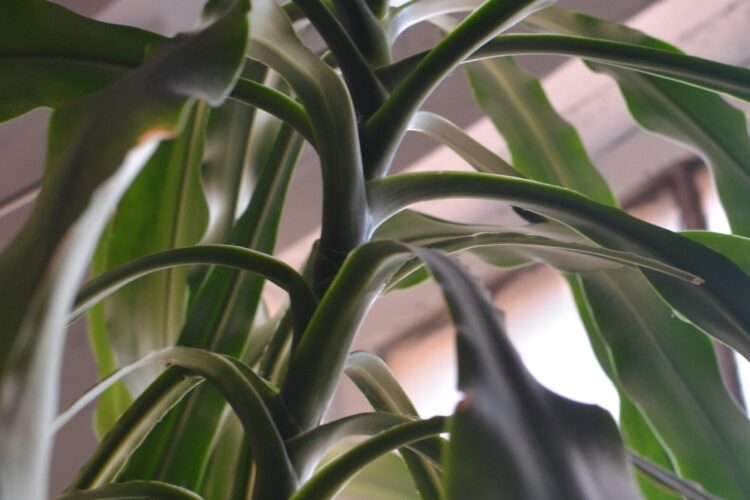
If your happy plant leaves are turning yellow, you’re not alone — it’s the most common complaint among Dracaena owners, and it almost always means something fixable. The tricky part is that happy plant leaves turning yellow can point to several different causes, from overwatering to fluoride in your tap water. Getting the diagnosis right is the difference between a quick fix and weeks of guesswork.
Your Dracaena fragrans — better known as the Happy Plant — is supposed to be exactly that: happy. But if you’ve noticed yellow leaves, brown tips, drooping stems, or brown spots, something in its environment has shifted. The good news is that a struggling Happy Plant almost always recovers once you identify the cause. The bad news? Happy Plant leaves turning yellow can mean several different things, and treating the wrong problem can make it worse.
Noticing your happy plant leaves turning yellow? This guide covers every possible reason — from overwatering and poor water quality to low light and natural ageing — along with clear, practical fixes for each. Whether it’s just the bottom leaves or the whole plant is affected, you’ll find your answer here. Moreover, this guide also covers every common Happy Plant problem — from happy plant leaves curling to full root rot — with a clear diagnosis checklist for each so you know exactly what you’re dealing with and how to fix it.
Understanding What To Do When Happy Plant Leaves Turn Yellow
Happy plant leaves turning yellow is rarely a single-cause problem. Depending on where the yellowing appears — lower leaves only, all over the plant, or starting at the edges — the cause and the solution are completely different. Before you change anything about your care routine, take a close look at the pattern the yellowing is following.
Quick Diagnosis: What Is Your Happy Plant Doing?
Use this table to find your symptom and jump to the right section.
| Symptom | Most Likely Cause |
|---|---|
| Yellow leaves — lower, older leaves only | Natural ageing — normal |
| Yellow leaves all over the plant | Overwatering or poor water quality |
| Brown tips on leaves only | Low humidity, fluoride/tap water buildup |
| Brown leaves — whole leaf going brown | Underwatering, too much direct sun |
| Brown spots on leaves | Leaf spot disease or cold damage |
| Leaves curling inward | Underwatering or low humidity |
| Leaves drooping and limp | Overwatering, root rot, or sudden cold |
| Leaves wilting despite moist soil | Root rot — roots can’t absorb water |
| Leaves turning yellow then mushy | Overwatering progressing to root rot |
| Happy Plant dying rapidly | Root rot or severe pest infestation |
Why Is My Happy Plant Turning Yellow?
Yellow leaves on a Happy Plant are the most common complaint — and also the most misdiagnosed, because yellowing has several distinct causes. Before you do anything, look at where the yellowing is happening.
1. Natural Leaf Loss (Don’t Panic)
If the lower, older leaves at the base of the plant are yellowing and dropping off while the top of the plant looks healthy and is producing new growth — this is completely normal. As a Dracaena matures and grows taller, it sheds its lower leaves to redirect energy upward. You’ll see this happen gradually over time.
What to do: Trim the yellowing leaves cleanly with sharp scissors. No other action needed.
2. Overwatering
Overwatering is the single most common cause of Happy Plant yellow leaves across the whole plant — not just the bottom. When the roots sit in wet soil for too long, they can’t absorb oxygen and begin to break down, causing leaves to yellow from the base outward.
Signs it’s overwatering:
- Yellowing starts at the base of individual leaves and spreads
- Soil feels wet or soggy well after watering
- The pot feels very heavy
- Leaves also feel soft and limp, not just discoloured
What to do: Allow the soil to dry out significantly before watering again. Dracaena fragrans likes to dry out at least halfway down the pot before its next drink. In autumn and winter, let it dry even further. Always ensure the pot has drainage holes and that you discard any excess water from the saucer — Happy Plants absolutely cannot sit in standing water.
3. Tap Water Quality (Fluoride and Chlorine Toxicity)
Dracaena is one of the houseplants most sensitive to fluoride and chlorine in tap water. Over time, these chemicals accumulate in the soil and begin to poison the plant. The early signs are yellowing leaves, particularly in older foliage, with browning starting at the tips and edges.
Signs it’s water quality:
- Yellowing combined with brown leaf tips that appear crispy, not mushy
- Happens gradually over months
- Affects older leaves more than new growth
- Tips turn brown before the rest of the leaf yellows
What to do: Switch to filtered water, rainwater, or distilled water. If you must use tap water, let it sit in an open container for at least 24 hours before use — this allows chlorine to evaporate, though fluoride will remain. Periodically flush the soil thoroughly with distilled water to wash out accumulated mineral and fluoride salts.
4. Too Little Light
A Happy Plant kept in deep shade will slowly lose its colour. Insufficient light causes the leaves to turn pale yellow-green, starting with newer growth. The plant will also grow slowly or stop growing altogether.
Signs it’s low light:
- Pale, washed-out yellowing rather than vivid yellow spots
- Slow or no new growth
- Plant leaning strongly toward the nearest light source
What to do: Move your Happy Plant to a brighter spot with bright, indirect light. Avoid harsh direct sun, which scorches leaves. A position a metre or two back from a south or east-facing window is typically ideal.
Why Are My Happy Plant Leaves Turning Brown?
Happy Plant leaves turning brown can mean something different depending on where and how the browning appears. The location of the browning is your biggest clue.
Brown Tips on Happy Plant Leaves
Brown tips — where only the very end of the leaf turns brown and crispy — are almost always caused by one of three things: low humidity, fluoride/mineral buildup in the water, or underwatering. This is the most common cosmetic complaint with Dracaena.
Causes of brown tips on Happy Plant leaves:
Low humidity is the leading cause. Dracaena fragrans is a tropical plant that prefers humidity levels above 40–50%. In centrally heated homes, especially in winter, air humidity can drop far below this. When air is too dry, the leaf tips are the first to suffer — they dry out, turn brown, and become crispy at the edges.
What to do: Place your Happy Plant on a pebble tray filled with water (ensuring the pot bottom doesn’t touch the water surface). Mist the leaves regularly. Consider a small humidifier nearby in winter months. Moving the plant away from radiators and heating vents will also help significantly.
Fluoride and tap water minerals cause brown tips that start at the very tip and slowly extend down the leaf margins. Unlike humidity-related browning, this type tends to get progressively worse over months, even when humidity is adequate.
What to do: Switch to rainwater or distilled water. Flush the soil with mineral-free water every few months to remove accumulated salts.
Underwatering causes brown, crispy tips followed by browning along the full leaf margin. The soil will feel completely dry and the pot will feel unusually light.
What to do: Water thoroughly until water drains freely from the bottom, then discard the drainage water.
Whole Leaves Turning Brown
When entire Happy Plant leaves turn brown rather than just the tips, the cause is usually more serious: severe underwatering, too much direct sunlight scorching the leaves, or overwatering that has progressed to root rot.
Sunscorch produces brown patches that appear bleached or washed out, typically on the side of the plant facing the light source. Direct afternoon sun through a south-facing window is a common culprit.
What to do: Move the plant out of direct sun. The brown patches won’t recover, but new growth will be healthy in the right conditions.
Brown Spots on Happy Plant Leaves
Brown spots on Happy Plant leaves — as distinct from brown tips or brown edges — are usually a sign of disease or cold damage.
Leaf Spot Disease (Fungal or Bacterial)
Dracaena is susceptible to both Fusarium leaf spot (fungal) and bacterial leaf spot. Both thrive in warm, moist conditions and are often triggered by overwatering, poor ventilation, or watering directly onto the leaves.
Signs of leaf spot disease:
- Round or irregular brown spots with yellow halos around them
- Spots appear randomly across the leaf surface rather than at tips or edges
- Damp, water-soaked areas on or around the spots
- Disease spreads upward or to nearby leaves over time
What to do for fungal leaf spot (Fusarium): Remove all affected leaves immediately. Avoid getting water on the foliage — water from below at soil level only. Improve airflow around the plant. A preventative fungicide spray can help in recurring cases.
What to do for bacterial leaf spot: Remove affected leaves. Increase temperature, light, and ventilation. Reduce watering frequency. Do not mist the leaves as this spreads bacteria.
Home remedy for mild leaf spot: Mix 1–2 tablespoons of baking soda with 1–2 teaspoons of mineral oil in a spray bottle of water and apply to affected leaves. This can help suppress mild fungal outbreaks.
Cold Damage
Dracaena fragrans prefers consistent temperatures between 18–27°C (65–80°F). Exposure to cold draughts — from open windows, air conditioning units, or cold exterior walls — can cause sudden brown spotting, leaf drop, and wilting.
Signs of cold damage:
- Brown spots appear suddenly after a cold snap or change in position
- Affected area may feel mushy rather than crispy
- Spots often appear on leaves closest to a cold window or vent
What to do: Move the plant away from cold draughts immediately. Don’t mist in cold weather. Avoid placing near single-glazed windows in winter.
Happy Plant Leaves Curling
Happy Plant leaves curling inward or downward is the plant’s way of reducing the surface area exposed to air — a survival response to moisture stress.
The most common causes are:
Underwatering — the most frequent reason. Check if the soil is very dry well below the surface. The leaves will also feel thinner and less rigid than usual.
Low humidity — if the soil is adequately moist but leaves are still curling, dry air is likely the cause. This is especially common in winter near radiators.
Root bound plant — if your Happy Plant has outgrown its pot, the roots can’t hold enough moisture to keep up with the plant’s needs, causing the leaves to curl even with regular watering. Check if roots are escaping from the drainage holes.
Pest infestation — spider mites, mealybugs, and scale insects all cause curling and distorted leaves as they drain moisture from the plant. Check the undersides of leaves carefully for tiny insects, webbing, or sticky residue.
Happy Plant Leaves Drooping
Happy Plant leaves drooping — hanging limp and downward rather than reaching upward — is a symptom that appears in both overwatered and underwatered plants, which makes it tricky to diagnose by look alone.
Check the soil first. If the soil is wet or soggy, drooping is a sign of overwatering or root rot. If it’s bone dry, the plant is thirsty.
After repotting, some drooping is normal and not a cause for concern — the plant loses fine root hairs in the process and temporarily struggles to absorb enough water while it recovers.
Sudden cold can also cause rapid drooping. If your plant wilted after being moved near a window or cold draught, temperature shock is the likely cause.
Happy Plant Root Rot: Signs, Causes & How to Save It
Root rot is the most serious condition your Happy Plant can develop, and it’s almost always caused by overwatering combined with poorly draining soil or a pot without drainage holes.
Signs of Root Rot in a Happy Plant
- Leaves yellowing and wilting even though the soil is wet
- Soil smells musty or sour
- Stem feels soft or mushy at the base
- When removed from the pot, roots appear brown, black, or translucent — healthy roots are firm and white or pale tan
- Leaves drooping despite regular watering (the damaged roots can’t transport water)
How to Save a Happy Plant with Root Rot
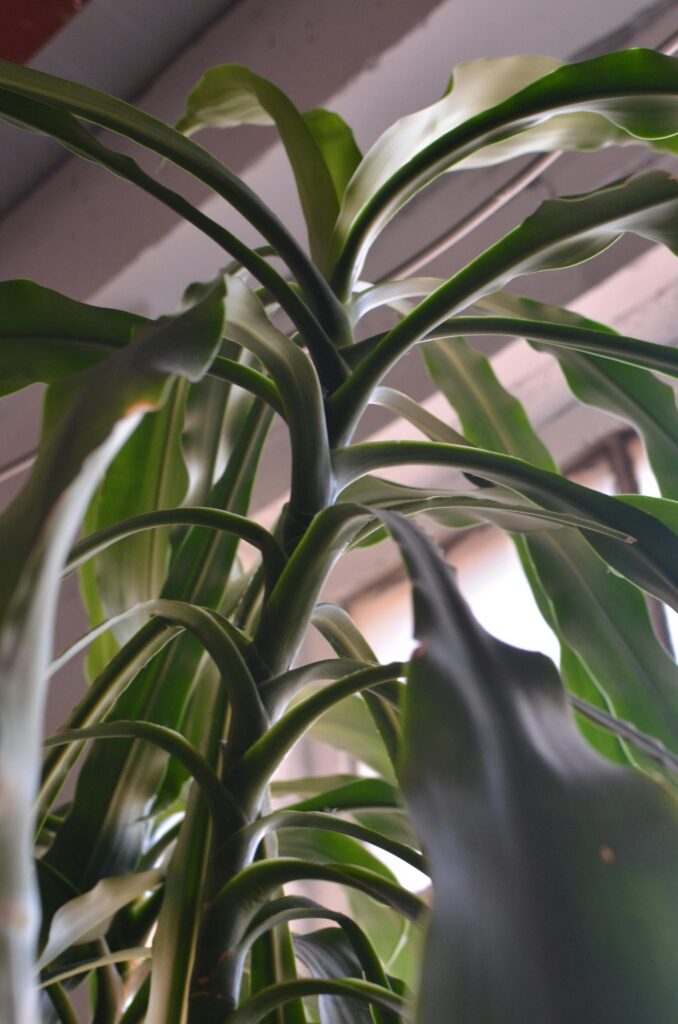
Acting quickly is essential. Root rot spreads fast and can kill the plant entirely if left untreated.
- Remove the plant from its pot and gently shake off the soil from the roots
- Inspect the roots — healthy roots are firm and pale; rotted roots are brown, black, soft, and may smell foul
- Cut away all rotted roots with clean, sterilised scissors or pruning shears. Cut back to healthy tissue
- Allow the roots to air dry for a few hours
- Treat with a diluted hydrogen peroxide solution (1 part 3% hydrogen peroxide to 4 parts water) to kill remaining fungal or bacterial pathogens
- Repot into fresh, well-draining soil — a mix with perlite or coarse sand works well for Dracaena
- Do not water for 3–5 days after repotting to allow the roots to recover
- Ensure the new pot has drainage holes
If the stem itself is soft and rotted at the base, the plant may be beyond saving. However, healthy upper sections can sometimes be propagated as stem cuttings.
Happy Plant Diseases: Full Overview
| Disease | Symptoms | Cause | Fix |
|---|---|---|---|
| Fusarium leaf spot | Brown spots with yellow halos, random placement | Fungal — warm, moist conditions | Remove leaves, improve airflow, fungicide |
| Bacterial leaf spot | Damp, blistered brown areas | Bacterial — overwatering, poor light | Remove leaves, increase light/ventilation, reduce watering |
| Root rot | Wilting, yellow leaves, mushy stem base, foul smell | Overwatering, poor drainage | Repot, trim rotted roots, treat with H2O2 |
| Fluoride toxicity | Brown crispy tips extending to leaf margins, older leaves affected most | Fluoride in tap water | Switch to distilled/rainwater, flush soil |
| Leaf scorch | Bleached brown patches on sun-facing side | Direct sunlight | Move to bright indirect light |
Pests That Make Your Happy Plant Unhappy
A stressed or weakened Happy Plant is more vulnerable to pests. The most common culprits:
Spider mites — nearly invisible to the naked eye, they leave fine webbing on leaf undersides and cause stippled, yellowing leaves. Treat with neem oil or insecticidal soap.
Mealybugs — appear as white fluffy deposits in leaf joints. Wipe off with cotton wool dipped in rubbing alcohol, then treat with neem oil.
Scale insects — brown, shell-like bumps on stems and leaf undersides. Remove manually, then treat with neem oil or horticultural oil.
What all three have in common: they suck sap from the plant, causing yellowing, wilting, and leaf drop — symptoms that mimic watering problems. Always check the undersides of leaves if your plant isn’t responding to watering adjustments.
Frequently Asked Questions
Why is my Happy Plant turning yellow? As mentioned above, happy plant leaves turning yellow is your plant’s way of asking for help. The most common causes are overwatering, tap water fluoride/chlorine buildup, insufficient light, or natural lower-leaf ageing. Check the soil moisture and the location of the yellowing to narrow down the cause.
Why are my Happy Plant leaves turning brown? Brown tips usually indicate low humidity or water quality issues. Brown whole leaves suggest underwatering, sunscorch, or advanced root rot. Brown spots are typically leaf spot disease or cold damage.
Why is my Happy Plant wilting? Wilting despite moist soil is a strong indicator of root rot — the roots are damaged and can’t transport water. If the soil is dry, the plant simply needs water. Check the roots to confirm.
Can a dying Happy Plant be saved? In most cases, yes — if root rot hasn’t fully taken over the stem. Trim rotted roots, repot in fresh soil, and adjust your watering routine. Plants in early-to-mid decline almost always recover with correct care.
Why are my Happy Plant leaves drooping? Drooping is most often caused by overwatering or underwatering — check the soil. It can also follow a repot (temporary) or sudden cold exposure.
Should I cut off yellow or brown leaves? Yes. Removing damaged leaves with clean scissors encourages the plant to redirect energy to healthy growth. It also improves airflow and reduces disease risk.
Is the Happy Plant toxic to pets? Yes — Dracaena fragrans is toxic to cats and dogs if ingested, causing vomiting, drooling, and loss of appetite. Keep it out of reach of pets.
Summary: Happy Plant Problem Cheat Sheet
| Problem | First Check | Quick Fix |
|---|---|---|
| Yellow leaves (lower only) | Is new growth healthy at the top? | Normal — trim and move on |
| Yellow leaves (all over) | Is soil wet? | Reduce watering; check drainage |
| Brown tips | Is air dry? Is water tap water? | Boost humidity; switch to filtered water |
| Brown spots | Any sign of damp patches or webbing? | Remove leaves; treat for disease or pests |
| Curling leaves | Soil moisture level | Water thoroughly or boost humidity |
| Drooping leaves | Soil — wet or dry? | Adjust watering; check for root rot |
| Wilting despite moist soil | Root condition | Check and trim roots; repot |
| Dying rapidly | Roots — are they brown/mushy? | Root rot rescue (see above) |
A healthy Dracaena “Happy Plant” is genuinely easy to care for once you understand what it’s telling you through its leaves. Most problems come down to watering — too much, too little, or the wrong kind. Get that right, find it a spot with bright indirect light and reasonable humidity, and your Happy Plant will live up to its name for years to come.
Happy plant leaves turning yellow is your plant’s way of asking for help — and once you know what to look for, the solution is usually straightforward. Check the soil, assess the light, consider your water source, and work through the diagnosis table above. Most Happy Plants bounce back quickly with the right adjustment.

0 Comments