Happy Plant
Ammara Azhar
7:55 pm - August 24, 2026
Plant Terrarium Guide: Best Types, Setup Tips, and Top Picks for Every Space
If you've ever killed a houseplant by forgetting to water it — or overwatering it into root rot — a plant terrarium solves both problems at once. It's a small, semi-enclosed glass environment that regulates its own humidity, making it one of the easiest ways to keep plants alive indoors, even if you don't consider yourself a "plant person."
This guide covers everything you need to choose, set up, and maintain a terrarium: which plants actually thrive in one, open vs. closed terrarium setups, how to build your own from scratch, and where to find reliable terrarium plants and supplies. Along the way, we'll point out a few propagation stations and terrarium stands worth considering if you'd rather start with a kit than build one from raw materials.
Affiliate disclosure: this article contains affiliate links. If you purchase through one of them, we may earn a small commission at no extra cost to you. We haven't personally tested every product listed; the details below are drawn from the manufacturers' own listings and customer rating data at the time of writing.
What Is a Plant Terrarium?
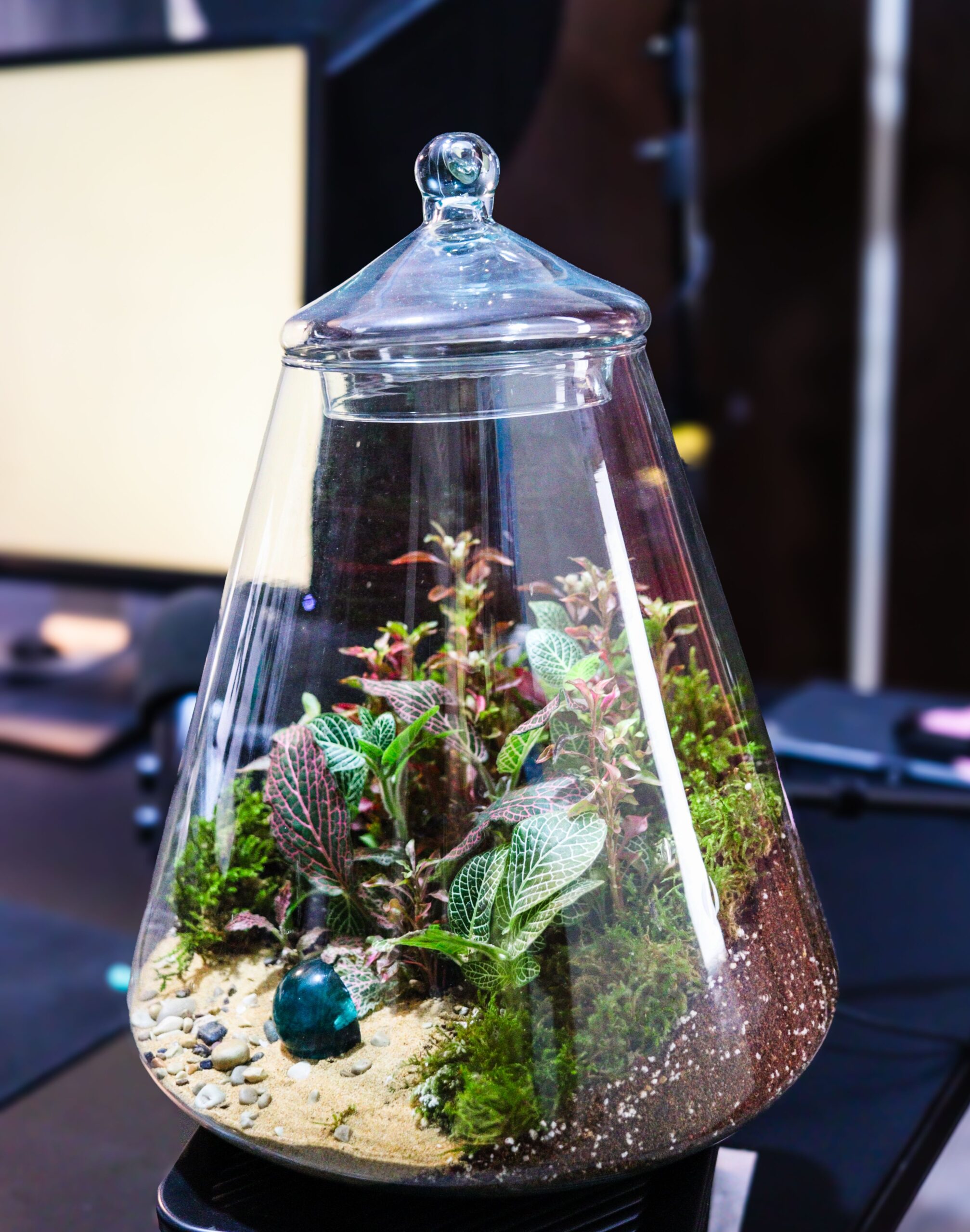
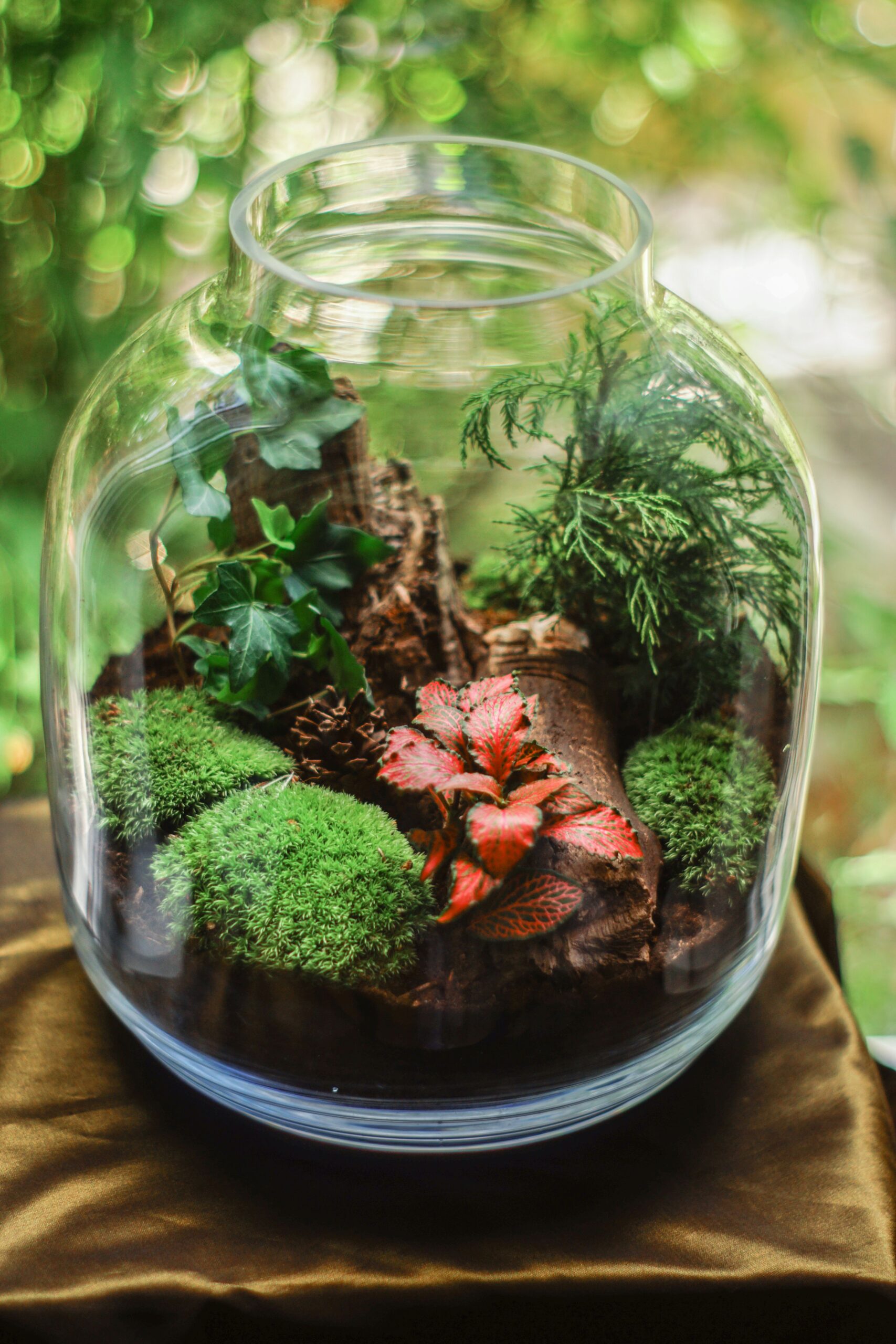
A plant terrarium is a glass or clear container used to grow plants in a controlled miniature environment. It can be open (allowing airflow, suited to succulents and air plants) or closed (nearly sealed, creating a self-sustaining humid ecosystem suited to ferns, moss, and tropical plants).
The glass traps moisture that plants release through transpiration, which condenses and drips back down — essentially creating a mini water cycle. That's why a well-balanced closed terrarium can go weeks without watering.
Open vs. Closed Terrarium: Which One Do You Need?
This is the first decision that shapes everything else about your terrarium, from the plants you can grow inside a terrarium to how often you'll need to touch it.
| Feature | Open Terrarium | Closed Terrarium |
|---|---|---|
| Humidity level | Low to moderate | High |
| Best plants | Succulents, cacti, air plants | Ferns, moss, fittonia, carnivorous plants |
| Watering frequency | Weekly or as needed | Rarely (self-sustaining) |
| Airflow | Constant | Minimal |
| Risk of mold | Lower | Higher if overwatered |
| Maintenance level | Low-moderate | Low once balanced |
If you tend to forget about your plants, a closed terrarium is more forgiving long-term. If you like succulents and don't want excess humidity fogging up the glass, go with an open design.
Best Plants for Terrariums (With Pictures in Mind)
Choosing the right terrarium plants list matters more than the container itself. Here are reliable options grouped by terrarium type, so you can picture what a plants-in-glass-terrarium setup could look like before you buy anything.
Terrarium Plants for Beginners
These are forgiving, slow-growing, and tolerant of minor care mistakes:
- Pothos (Golden, Neon, Jade, Marble Queen) — thrives in both open and closed setups
- Nerve plant (Fittonia) — loves closed, humid terrariums
- Baby's tears (Soleirolia) — low, mossy groundcover for closed terrariums
- String of turtles — a compact trailing succulent-adjacent plant with striking patterned leaves, well suited to a partially closed terrarium with bright, indirect light
- Air plants (Tillandsia) — no soil required, ideal for an air plant terrarium in an open glass orb
- Peperomia — compact, tolerant of both low and bright indirect light
Closed Terrarium Plants
Plants that specifically prefer the humidity of a sealed or near-sealed environment:
- Ferns (maidenhair, button fern)
- Moss (sheet moss, cushion moss)
- Fittonia
- Miniature orchids
- Baby's tears
Carnivorous Plant Terrarium Options
A carnivorous plant terrarium needs consistently high humidity, bright indirect or filtered direct light, and distilled or rainwater (tap water minerals can harm these plants). Good candidates include:
- Venus flytrap — needs a few hours of direct or strong light daily
- Sundew — thrives in high humidity, tolerates a smaller enclosure
- Pitcher plant (Nepenthes or Sarracenia) — needs more vertical space, so a taller plant terrarium works better
For a carnivorous plant terrarium setup guide: use a well-draining, nutrient-poor substrate (sphagnum moss and perlite, not regular potting soil), keep the terrarium partially open for airflow to reduce fungal issues, water only with distilled or rainwater, and place it somewhere it gets bright light for several hours a day. Avoid fertilizing — carnivorous plants get nutrients from prey, not soil.
How to Plant a Terrarium (Step-by-Step)
Building a DIY plant terrarium isn't complicated once you understand the layering system, which functions like a mini drainage and filtration system for the glass.
- Add a drainage layer. Use small pebbles or gravel at the bottom (about 1–2 inches) so excess water has somewhere to go besides the roots.
- Add a barrier layer. A thin layer of activated charcoal helps prevent mold and odor buildup, especially important in closed terrariums.
- Add a soil barrier (optional). A layer of sphagnum moss between the charcoal and soil keeps the substrate from washing down into the drainage layer.
- Add potting mix. Use a well-draining potting mix appropriate for your plant type — succulent/cactus mix for open terrariums, standard or peat-based mix for closed, humidity-loving plants.
- Plant your terrarium plants. Position taller plants toward the back or center depending on the viewing angle, and leave space between plants so they're not competing immediately.
- Add decorative elements. Terrarium rocks, moss, small figurines, or bark can fill gaps and control moisture pockets.
- Water lightly and observe. For closed terrariums, mist rather than pour, then watch for condensation over the next 24–48 hours to gauge humidity balance.
- Adjust airflow as needed. If condensation is heavy and constant, leave the lid cracked open for a few hours to let excess moisture escape.
This same process applies whether you're using a large glass jar, a repurposed fish tank, or a dedicated terrarium starter kit — the plant terrarium supplies are largely interchangeable.
Terrarium Supplies and Accessories You'll Actually Need
A basic plant terrarium kit setup calls for:
- A clear glass container (with or without a lid, depending on open/closed design)
- Drainage material (pebbles, LECA, or gravel)
- Activated charcoal
- Potting substrate suited to your plants
- Terrarium rocks or decorative stones
- A small spray bottle for misting
- Long tweezers or tongs for placing plants in narrow-necked containers
- Optional: a small grow light if your terrarium won't get consistent natural light
If you're placing your terrarium on a desk or shelf with limited natural light, a plant terrarium with grow light — or a small clip-on LED grow light added to an existing setup — can make a real difference for plants like ferns and fittonia that need consistent brightness but not direct sun.
Terrarium Stands and Propagation Stations Worth Considering
Not every terrarium needs to be a sealed jar. Propagation stations — small stands holding individual glass vases — are technically open terrariums designed specifically for rooting cuttings in water, and they double as attractive plant terrarium decor for a desk, windowsill, or office shelf.
Here's a look at a few wooden-stand propagation terrariums, since these consistently come up when people search for a plant terrarium with wooden stand or an easy terrarium starter kit that requires no substrate or drainage layers at all.
1. XXXFLOWER Plant Terrarium with Wooden Stand, 3 Bulb Vase
This one pairs a natural wood frame with three borosilicate glass bulb vases on a metal swivel rod, which makes changing the water noticeably easier than lifting vases out of a fixed frame. It's built for water-rooted cuttings and small houseplants — pothos, African violets, lucky bamboo — rather than soil-based terrarium planting, so it suits anyone who wants a low-maintenance, no-substrate option for a desk or windowsill. Plants are not included.
Good for: shoppers who want an easy-to-refill wooden-stand terrarium for a desk or windowsill.
Consider instead if: you want a soil-based closed terrarium rather than a water propagation setup.
Check the current price of the XXXFLOWER Wooden Stand Terrarium
2. Renmxj Plant Propagation Station, 3 Bulb Glass Vases
A budget-friendly wooden-stand option with a C-shaped metal rod design, available in both 3-bulb and 5-bulb vase sizes depending on how many cuttings you're propagating at once. Assembly is minimal, and the included cleaning brush is a small but useful detail for keeping the glass clear over time. Good fit for beginners who want to start with water propagation before committing to a full soil terrarium.
Good for: beginners who want a low-cost, no-assembly entry point into propagation.
Consider instead if: you want more than 5 vases at once — a larger wall-mounted set will hold more cuttings.
See the available sizes from Renmxj
3. Mkono 3-Tier Wall Hanging Propagation Station
A vertical, wall-mounted design with 15 test tubes across three tiers, better suited to people short on desk or shelf space who still want a larger plant terrarium display. It's more of a statement piece than the compact bulb-vase stands, and works well for propagating multiple cuttings of trailing plants like pothos or lucky bamboo side by side.
Good for: larger plant collections and wall displays where desk space is limited.
Consider instead if: you only need a handful of vases — a compact desktop stand will be easier to manage.
Compare the Mkono 3-Tier Wall Hanging Station
4. Mkono 4-Pack Wall Propagation Planters
Individual oblate glass vases with a small mounting hole, designed to be arranged directly on a wall rather than on a stand. This is a good option if you're building a plant terrarium wall display and want flexibility in spacing and arrangement rather than a fixed frame.
Good for: custom wall arrangements where you want to control spacing yourself.
Consider instead if: you'd rather have a pre-built stand with fixed vase spacing.
View the Mkono Wall Propagation Planter set
5. Renmxj 5 Test Tube Propagation Station
A compact, no-assembly-required option with five glass test tubes on a small wood base, well suited for a desk or windowsill where a larger stand won't fit. It's aimed squarely at water propagation of common houseplants (pothos, English ivy, peace lily cuttings) rather than a soil-based closed terrarium.
Good for: small desks and windowsills that need a compact, ready-to-use stand.
Consider instead if: you're propagating more than five cuttings at once.
Check current pricing on the Renmxj 5 Test Tube Station
Quick comparison
| Product | Vases / Tiers | Best for |
|---|---|---|
| XXXFLOWER Wooden Stand Terrarium | 3 bulb vases | Easy-refill desk or windowsill display |
| Renmxj Propagation Station | 3 or 5 bulb vases | Budget-friendly beginner setup |
| Mkono 3-Tier Wall Hanging Station | 15 test tubes | Larger wall displays, saving desk space |
| Mkono Wall Propagation Planters | 4 individual vases | Custom wall arrangements |
| Renmxj 5 Test Tube Station | 5 test tubes | Compact desks and windowsills |
None of these are substrate-based closed terrariums for soil planting — they're propagation-style open terrariums for water-rooted cuttings and small houseplants. If you're planning a carnivorous plant terrarium or a moss-and-fern closed terrarium, you'll want a sealed or near-sealed glass container with a lid instead, built using the layering method described above.
Terrarium Placement: Desk, Office, or Kids' Room
Where you put a terrarium affects both plant health and practicality:
- Plant terrarium for desk or office: Choose compact, low-maintenance plants like pothos, air plants, or small ferns. Avoid direct afternoon sun through office windows, which can overheat a closed glass container.
- Plant terrarium for kids: Stick to non-toxic, sturdy plants (pothos and succulents are common choices, though pothos is mildly toxic if ingested — supervise young children) and a wide-mouth container that's easy for small hands to help maintain.
- Plant terrarium for humidity-loving plants: Bathrooms with a window often provide the humidity ferns and fittonia want naturally.
Common Mistakes to Avoid
- Overwatering a closed terrarium. Mist lightly; you're not watering a regular potted plant. Too much water leads to mold and root rot.
- Skipping the drainage layer. Without pebbles and charcoal at the bottom, water has nowhere to go and pools around the roots.
- Mixing incompatible plants. A cactus and a fern have opposite humidity needs — pairing them means one will struggle no matter how you manage the terrarium.
- Placing terrariums in direct sun. Glass intensifies heat, and a closed terrarium in direct sunlight can effectively cook the plants inside.
- Using regular potting soil for carnivorous plants. It's too nutrient-rich and will harm plants adapted to nutrient-poor bogs.
Where to Buy Terrarium Plants and Supplies
Terrarium plants for sale are available from a few reliable sources:
- Local nurseries and garden centers — best for inspecting plant health before buying, and often have staff who can advise on what pairs well together.
- Specialty online plant retailers — useful for less common closed terrarium plants like miniature orchids or specific moss varieties that big-box stores rarely stock.
- Carnivorous plant nurseries — for Venus flytraps, sundews, and pitcher plants, a specialist grower is usually a safer bet than a general retailer, since these plants are more sensitive to shipping stress.
- Amazon and similar marketplaces — convenient for terrarium containers, starter kits, substrate, and accessories like the propagation stations above, though live plant selection and quality vary more by seller.
Frequently Asked Questions
What plants are good for terrariums?
Pothos, fittonia, ferns, moss, baby's tears, and air plants are all good for terrariums because they tolerate humidity and low light. Succulents and air plants suit open terrariums, while ferns, moss, and fittonia do better in closed, humid setups.
How do you plant a terrarium?
Layer drainage material, activated charcoal, and potting substrate at the bottom, then plant your chosen terrarium plants, leaving space between them. Add decorative rocks or moss, water lightly, and adjust airflow based on how much condensation builds up on the glass.
What are the best plants for a terrarium if you're a beginner?
Pothos, string of turtles, and air plants are among the best plants for a terrarium if you're new to this, since they tolerate inconsistent watering and adapt to a range of light conditions better than more delicate species like orchids or carnivorous plants.
Where do you buy terrarium plants?
Local nurseries, specialty online plant shops, and carnivorous plant nurseries (for Venus flytraps and pitcher plants) are the most reliable sources. Marketplaces like Amazon are better suited to terrarium containers, substrate, and accessories than to live plants, since live plant quality varies by seller.
How do you build a plant terrarium from scratch?
Start with a clear glass container, add a drainage layer of pebbles, a thin layer of activated charcoal, then potting substrate suited to your plants. Plant, add decorative elements like terrarium rocks, mist lightly, and monitor condensation for the first 48 hours to fine-tune moisture levels.
Do closed terrarium plants need airflow?
Some airflow prevents mold, even in closed terrariums. Cracking the lid periodically — especially after heavy condensation — helps balance humidity without letting the environment dry out completely.
Can you keep a carnivorous plant terrarium indoors year-round?
Yes, as long as it gets enough light (often several hours of direct or strong indirect light daily) and is watered only with distilled or rainwater. Many carnivorous plants, particularly temperate Venus flytraps, also need a cooler winter dormancy period to stay healthy long-term.
What's the difference between a terrarium and a propagation station?
A terrarium is typically a soil-based, glass-enclosed environment for growing plants long-term, while a propagation station is an open system of water-filled vases used to root cuttings before they're potted in soil. Propagation stations like the ones above don't use substrate or a drainage layer the way a planted terrarium does.
Final Thoughts
A plant terrarium works best when the container, the plants, and the humidity level are matched to each other rather than chosen separately. Decide whether you want an open, low-maintenance setup or a closed, self-sustaining one first — that single choice determines almost everything else, from which terrarium plants list to shop from to how often you'll need to check on it.
Ready to start your own setup? Compare the wooden-stand terrarium options above by vase count and price to find the one that fits your desk, wall, or windowsill — or, if you have questions about which terrarium plants would suit your space, feel free to reach out and we'll help you figure out what will work best.

Ammara Azhar
I'm Ammara Azhar, the founder of HappyPlant.info and a content writer passionate about creating clear, well-researched content on plant care, gardening, and lifestyle topics. I enjoy turning reliable information into practical, easy-to-follow guides that help readers care for their plants with confidence. My writing focuses on accuracy, simplicity, and providing genuine value. Through thoughtful research and engaging content, I aim to make gardening more accessible and enjoyable for beginners and experienced plant lovers alike.

0 Comments