Purple Clematis: Best Varieties, Meaning & Care Guide
Purple clematis is one of the most popular flowering vine colors for trellises, arbors, and fences, prized for its bold, showy blooms and long flowering season. This guide covers the most popular purple clematis varieties, what purple clematis symbolizes, and general care tips to help your vine thrive. For more plant care guides, see our homepage.
Popular Purple Clematis Varieties
Purple clematis spans a wide range of shades, bloom shapes, and growth habits. Some of the most well-known varieties include:
- Jackmanii — the classic, vigorous purple clematis with large, deep violet-purple blooms; one of the most widely grown clematis varieties for good reason
- 'The President' — a rich purple bloom with a distinctive silvery-purple reverse on the petals
- 'Multi Blue' — technically more violet-blue, known for its ruffled, double-flowered blooms that resemble a pom-pom
- 'Étoile Violette' — a smaller-flowered, deep violet variety that blooms prolifically over a long season
- Happy Jack Purple — a compact, container-friendly variety bred for smaller gardens, offering purple blooms on a more manageable vine
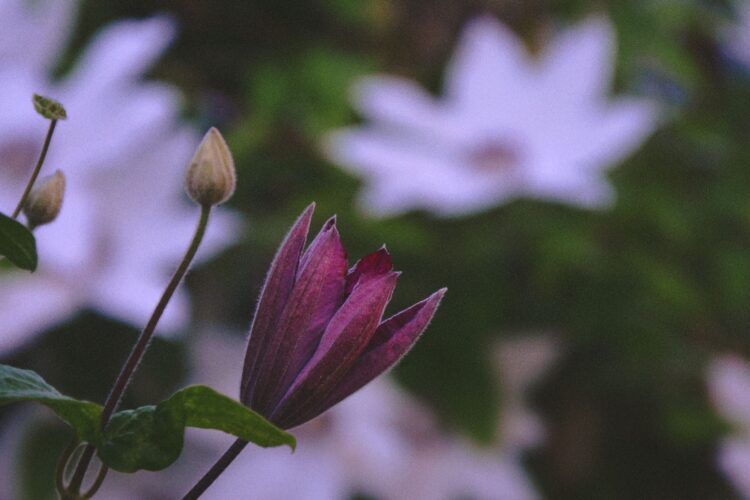
- Leather flower (Clematis viorna) — a native, non-climbing-in-the-typical-sense species with charming, urn-shaped purple-to-maroon blooms, popular in native plant gardens
Dark Purple vs. Light Purple Clematis Varieties
Clematis purple tones range widely. Deep, dark-purple varieties like Jackmanii and 'Étoile Violette' create a dramatic, saturated look, while lighter lavender-purple varieties offer a softer effect that pairs well with pastel garden schemes. Bloom size also varies significantly — some varieties produce large single blooms 4–6 inches across, while others, like leather flower, have smaller, more delicate nodding flowers.
Purple Clematis Jackmanii: A Closer Look
Jackmanii remains the benchmark purple clematis for many gardeners. It's a vigorous climber, often reaching 8–12 feet, with large 4–6 inch violet-purple blooms that appear from early summer into fall. It's typically classified as a Group 3 pruner, meaning it blooms on new growth and can be cut back hard in late winter or early spring to encourage strong new flowering growth.
What Does Purple Clematis Mean?
In general flower symbolism, purple flowers are often associated with elegance, dignity, and admiration, and clematis specifically has long been linked to themes of mental ingenuity, cleverness, and artistic beauty in Victorian flower language. As with most flower meanings, these associations come from folklore and tradition rather than any fixed or universally agreed-upon rule, so interpretations can vary by source and culture.
How to Care for Purple Clematis
Light: Most purple clematis varieties do best with several hours of direct sun on the vine and flowers, following the classic clematis guidance of "head in the sun, feet in the shade."
Soil: Rich, well-draining soil with consistent moisture supports strong blooming; clematis dislike waterlogged roots.
Roots: Keep the root zone cool and shaded with mulch or a low companion plant, since clematis roots are sensitive to heat and drying out.
Support: As climbing vines, most purple clematis varieties need a trellis, obelisk, or similar structure, since they climb by wrapping their leaf stems around supports rather than clinging directly like ivy.
Pruning: Pruning needs depend on the variety's pruning group — check your specific cultivar's group before cutting back, since pruning at the wrong time can remove the wood that would have produced that season's blooms.
Feeding: A balanced, slow-release fertilizer applied in spring supports healthy growth and a fuller bloom display through the season.
Quick FAQ
What is the darkest purple clematis variety?
Jackmanii and 'Étoile Violette' are among the more deeply saturated purple varieties commonly available, though exact shade can vary by growing conditions and individual plant.
What does a purple clematis flower symbolize?
Purple flowers are traditionally linked to elegance and admiration, and clematis in particular has historically been associated with mental beauty and ingenuity in flower-language traditions.
How do I best care for a purple clematis?
Give the vine plenty of sun, keep the roots cool and shaded, provide a sturdy support structure, water consistently, and prune according to the plant's specific pruning group.
Is Jackmanii the same as Happy Jack clematis?
No — they're related but different varieties. Jackmanii is a larger, more vigorous vine with bigger blooms, while Happy Jack is a compact variety bred for smaller spaces and containers.
Final Thoughts
Purple clematis brings dramatic, long-lasting color to any vertical garden space, whether you choose a classic vigorous grower like Jackmanii or a more compact variety suited to a smaller trellis or pot. With the right sun, root protection, and pruning timing for your specific variety, a purple clematis can reward you with a full, showy display season after season.
For more plant guides, explore plants that bring happiness and what a happy plant actually means. You can also learn more about us or get in touch with questions, or visit our homepage for more plant care guides.


0 Comments