

How to Make Your Plants Happy: The Ultimate Guide
Everything you need to know about the Happy Bean Plant, ZZ Plant, Aloe Vera, propagation, pruning, grow lights, and pet safety — all in one place.
Whether you’re a seasoned plant parent or just starting your green journey, knowing how to make your plants happy is the foundation of every thriving indoor garden. In this comprehensive guide, we cover everything from how to care for a happy bean plant, how do you make a ZZ plant happy, all the way to how to plant a room and grow a happy home. Let’s dig in.
1. What Is the Happy Bean Plant?
The Happy Bean Plant (Peperomia ferreyrae) is a charming succulent-like houseplant native to the rainforests of Peru. Named for its distinctive bean-shaped, lime-green leaves that arch toward the light, it’s beloved for being low-maintenance yet visually striking. It belongs to the large Peperomia family, which includes over 1,000 species.
If you’ve been wondering how to grow a happy plant of this type, you’re in luck — the Happy Bean is one of the most forgiving houseplants you can own. It stores water in its thick leaves, making it drought-tolerant and perfect for forgetful waterers.
Light
Bright indirect light
Water
Every 1–2 weeks
Temperature
65–80°F (18–27°C)
Humidity
Average home humidity
Soil
Well-draining mix
Pet Safe?
Generally non-toxic
2. How to Care for a Happy Bean Plant
Learning how to care for a happy bean plant comes down to mastering a few core conditions. Here’s a detailed breakdown:
💡 Light Requirements
The Happy Bean thrives in bright, indirect sunlight. Place it near an east- or west-facing window. Direct afternoon sun can scorch the delicate bean-shaped leaves. If natural light is limited in your home, this is a great candidate for a grow light or happy light.
💧 Watering
One of the most common mistakes when figuring out how to care for happy plant varieties like this one is overwatering. The Happy Bean stores moisture in its leaves — water only when the top inch of soil is completely dry. Reduce watering in winter when growth slows.
Always water deeply but infrequently. Empty saucers after 30 minutes to prevent root rot — the single biggest killer of Happy Bean plants.
🪴 Soil & Potting
Use a well-draining potting mix — a 50/50 blend of standard potting soil and perlite works beautifully. Make sure the pot has drainage holes. Repot every 2 years or when you see roots escaping the drainage hole.
🌡️ Temperature & Humidity
The Happy Bean prefers temperatures between 65–80°F (18–27°C). It adapts well to average household humidity (40–60%), making it excellent for most indoor environments. Avoid placing it near cold drafts, heating vents, or air conditioning units.
🌿 Fertilizing
Feed monthly during the growing season (spring and summer) with a balanced liquid fertilizer diluted to half strength. Skip fertilizing in fall and winter. Over-fertilizing can cause salt buildup and leaf burn — less is more with this plant.
| Care Factor | Ideal Condition | Common Mistake |
|---|---|---|
| Light | Bright indirect | Too much direct sun |
| Water | When top inch is dry | Overwatering |
| Soil | Well-draining mix | Dense, waterlogged soil |
| Temperature | 65–80°F | Cold drafts or frost |
| Fertilizer | Monthly in growing season | Year-round fertilizing |
3. How to Propagate a Happy Bean Plant (Including in Water)
Once you’ve mastered how to care for happy bean plant, you’ll likely want more of them — and propagation is surprisingly easy. There are two main methods: stem cuttings in soil and how to propagate happy bean plant in water.
🌿 Method 1: Stem Cuttings in Soil
Take a cutting
Use clean, sterilized scissors to cut a healthy stem with at least 2–3 leaves. Cut just below a leaf node.
Let it callous
Allow the cut end to dry for 24–48 hours in open air. This prevents rot when placed in soil.
Plant in moist mix
Insert the cutting into a well-draining potting mix. Water lightly and place in bright indirect light.
Wait for roots
New roots typically develop within 3–6 weeks. Resist the urge to tug the cutting to check for roots!
💧 Method 2: How to Propagate Happy Bean Plant in Water
Water propagation is a great way to watch roots develop and is a favorite among plant enthusiasts who love seeing the process unfold. Here’s how:
Prepare your cutting
Take a 3–4 inch stem cutting with a few leaves. Remove any lower leaves that would sit below the waterline.
Place in water
Put the cutting in a small glass or jar with clean, room-temperature water. Only the stem should be submerged — not the leaves.
Change water weekly
Refresh the water every 5–7 days to prevent bacterial growth and keep oxygen levels high.
Transition to soil
Once roots are 1–2 inches long (usually 4–6 weeks), carefully transfer to potting mix. Water lightly and keep the soil moist for the first week.
Place your water propagation jar in a bright, warm spot out of direct sun. A warm windowsill works perfectly and speeds up root development.
4. How to Prune Happy Bean Plant
Knowing how to prune happy bean plant keeps your plant looking lush and encourages bushier, fuller growth. Unlike some plants, the Happy Bean doesn’t require aggressive pruning — just regular light maintenance.
When to Prune
The best time to prune is spring or early summer, just as the plant enters its active growing season. Avoid heavy pruning in fall or winter when the plant is resting.
How to Do It
Sterilize your tools
Use rubbing alcohol on sharp scissors or pruning shears before making any cuts to avoid introducing disease.
Remove dead or yellowing leaves
Pinch or cut at the base. These drain energy from healthy growth and can attract pests.
Trim leggy stems
Cut leggy stems back to a healthy leaf node. This redirects energy and promotes a bushier shape.
Save cuttings for propagation
Don’t throw those pruned stems away — use them to propagate new plants using the methods above!
Never remove more than one-third of the plant at a time. Over-pruning stresses the plant and can halt growth for several weeks.
5. How Do You Make a ZZ Plant Happy?
The ZZ plant (Zamioculcas zamiifolia) is arguably the toughest houseplant on the planet. If you’ve been asking how do you make a ZZ plant happy, the honest answer is: just don’t kill it. But here’s how to help it truly thrive:
Low Light Tolerant
Thrives even in dim corners
Drought Tolerant
Water every 2–4 weeks
Temp Range
60–80°F (15–26°C)
Slow Grower
Don’t expect rapid change
The ZZ plant’s rhizomes (underground storage organs) hold water for months, which is why overwatering is the main threat to its happiness. Use the “lift test” — if the pot feels light, it’s time to water; if it feels heavy, hold off. Place it in indirect light, avoid cold windows in winter, and fertilize just twice a year. That’s genuinely all it takes. For more details, visit The Spruce’s ZZ Plant Care Guide.
6. How to Make My Aloe Plant Happy
Aloe vera is one of the most popular houseplants in the world — and for good reason. But many people still struggle to understand how to make my aloe plant happy. Here are the fundamentals:
☀️ Light: Give It Plenty
Aloe craves 6+ hours of bright, indirect light daily. A south- or west-facing window is ideal. Insufficient light causes the plant to become pale and “reach” (etiolate) toward the nearest light source.
💧 Water: Less Is More
Water deeply every 2–3 weeks in summer, once a month in winter. Always let the soil dry out completely between waterings. Never let aloe sit in standing water — its thick roots rot very quickly.
🪨 Soil: Drainage Is Everything
Use a cactus or succulent mix, or blend regular potting soil with coarse sand or perlite. A terracotta pot is ideal as it wicks away excess moisture. For a full guide on aloe care, The Old Farmer’s Almanac has an excellent resource.
An aloe plant that’s slightly root-bound (a little crowded in its pot) will actually be happier and more productive than one with too much space. Only repot when roots are visibly escaping the drainage holes.
7. Is a Happy Light Good for Plants?
You’ve probably seen Happy Lights (also marketed as SAD lamps or full-spectrum light therapy lamps) advertised for human mood and seasonal depression — but is a happy light good for plants?
The short answer: it depends on the specific lamp. Traditional Happy Lights designed for human use emit full-spectrum white light that mimics sunlight, including some wavelengths useful for plants. However, they are not optimized for plant growth — they typically lack the ideal ratio of red and blue light wavelengths that plants use most efficiently for photosynthesis.
What Plants Actually Need
Plants primarily use blue light (400–500 nm) for vegetative growth and red light (600–700 nm) for flowering and fruiting. A dedicated LED grow light provides these wavelengths in the right ratios and is far more effective than a Happy Light for plant growth.
| Light Type | Good for Humans? | Good for Plants? |
|---|---|---|
| Happy Light (SAD lamp) | ✅ Yes | ⚠️ Partially |
| Full-spectrum LED grow light | ✅ Somewhat | ✅ Excellent |
| Standard incandescent bulb | ❌ No | ❌ Ineffective |
| Fluorescent (T5/T8) | ⚠️ Limited | ✅ Good |
For low-light spaces, invest in a purpose-built LED grow light. The Happy Bean plant, ZZ plant, and most tropical houseplants respond well to 10–14 hours of supplemental grow light per day when natural light is limited.
8. Is Happy Bean Plant Toxic to Cats?
This is one of the most searched questions among plant-loving pet parents: is happy bean plant toxic to cats? The good news is reassuring for most households.
The Happy Bean Plant (Peperomia ferreyrae) is considered non-toxic to cats and dogs according to the ASPCA’s Toxic and Non-Toxic Plant List. Peperomia species are classified as non-toxic to both cats and dogs, making them an excellent choice for pet-friendly homes.
While Peperomia is generally considered non-toxic, eating large quantities of any plant material can cause mild digestive upset in cats (vomiting, diarrhea). If your cat ingests a large amount of any plant, contact your veterinarian or the ASPCA Animal Poison Control Center at (888) 426-4435. Always keep plants out of reach as a precaution.
🐾 Other Pet-Safe Alternatives
If you’re building a pet-friendly indoor garden, consider pairing the Happy Bean with other non-toxic plants like Spider Plants, Calatheas, Boston Ferns, and Areca Palms. Avoid toxic plants like Pothos, Philodendrons, and Peace Lilies around curious cats.
9. How to Keep Plants Happy: General Tips for Every Houseplant
Beyond species-specific care, how to keep plants happy really comes down to a handful of universal principles that apply whether you’re growing a Happy Bean, a ZZ plant, or a sprawling Monstera.
Match the plant to the environment
Don’t fight your home’s natural conditions. A low-light apartment calls for ZZ plants and pothos, not sun-loving succulents. Set your plants up for success from the start.
Water based on soil, not schedule
Always check soil moisture before watering. Finger test the top inch of soil — if it’s still moist, wait. This single habit prevents 90% of common plant problems.
Clean your leaves
Dust-covered leaves can’t photosynthesize efficiently. Wipe large-leafed plants with a damp cloth monthly and give smaller plants an occasional gentle shower.
Check for pests regularly
Inspect the undersides of leaves for spider mites, mealybugs, and scale insects. Early detection is key — treat with neem oil or insecticidal soap at the first sign.
Talk to your plants (seriously)
Research suggests plants respond to CO₂ from human breath and the vibrations of sound. More practically, talking to your plants means you’re paying attention to them — which is always beneficial.
10. How to Plant a Room and Grow a Happy Home
Understanding how to plant a room and grow a happy home is about more than just placing pots on windowsills. It’s about designing a living space where plants and people thrive together.
🏠 Zone by Light
Walk through your home and assess each room’s light at different times of day. Bright windows: succulents, aloe, happy bean plants. Medium indirect light: pothos, peace lily, snake plants. Low-light corners: ZZ plants, cast iron plants, Chinese evergreen.
🎨 Create Plant Clusters
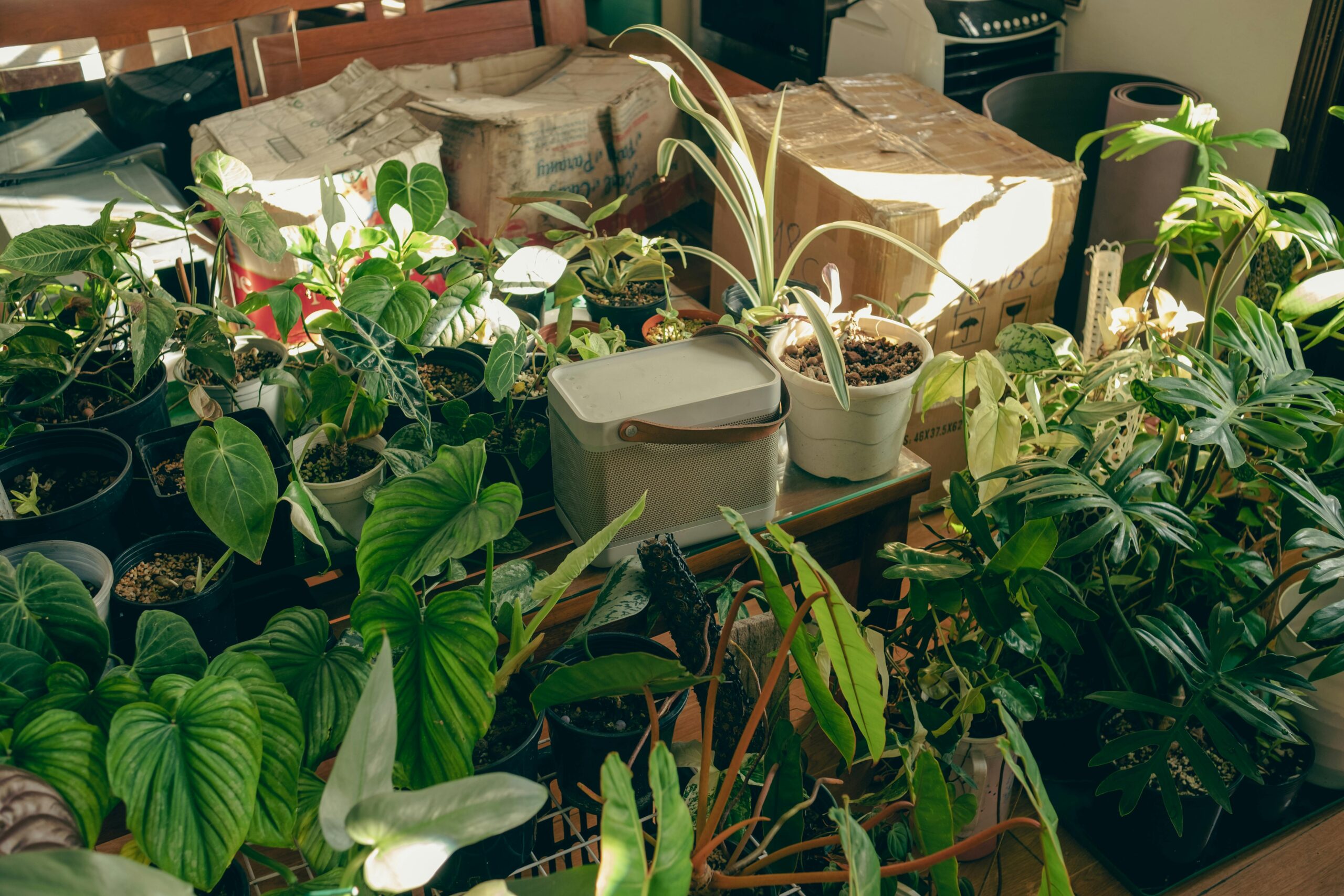
Grouping plants together raises local humidity through transpiration, benefits all the plants in the cluster, and creates visually stunning indoor garden moments. Aim for odd numbers (3, 5, 7 plants) and vary heights for the most dynamic look.
🌬️ Improve Air Quality
Research by NASA found that certain houseplants can remove volatile organic compounds (VOCs) from indoor air. Top performers include Spider Plants, Peace Lilies, and Boston Ferns.
🧘 The Mental Health Connection
Studies consistently show that living with plants reduces stress, improves focus, and boosts mood. A 2022 study published in the International Journal of Environmental Research and Public Health found that people with more indoor plants reported greater life satisfaction and lower levels of anxiety.
Bedroom: Lavender, Snake Plant, Aloe Vera (air-purifying, low maintenance). Kitchen: Herbs (basil, mint), Pothos. Bathroom: Ferns, Orchids (love humidity). Living Room: Fiddle Leaf Fig, Monstera, Happy Bean Plant. Home Office: ZZ Plant, Succulents, Peperomia.
Conclusion
From understanding how to care for a happy bean plant to mastering how to make a ZZ plant happy, the journey to a thriving indoor garden is deeply rewarding. Remember: most plants don’t need perfection — they need consistency, appropriate light, mindful watering, and a little attention. Whether you’re propagating happy bean plant cuttings in water, pruning leggy stems, or curating a plant-filled sanctuary at home, every green choice you make moves you closer to a happier, healthier living space.
Start small, learn your plants’ individual rhythms, and don’t be discouraged by the occasional setback. Every experienced plant parent has killed a few along the way — and that’s perfectly okay.
Happy growing! 🌱
🏷️ Article Tags

Ammara Azhar
I'm Ammara Azhar, the founder of HappyPlant.info and a content writer passionate about creating clear, well-researched content on plant care, gardening, and lifestyle topics. I enjoy turning reliable information into practical, easy-to-follow guides that help readers care for their plants with confidence. My writing focuses on accuracy, simplicity, and providing genuine value. Through thoughtful research and engaging content, I aim to make gardening more accessible and enjoyable for beginners and experienced plant lovers alike.
0 Comments