Happy Plant
Ammara Azhar
2:40 pm - November 3, 2026
Share:
Aquatic Plants for Aquarium: Types, Benefits and Complete Care Guide
Have you ever looked at a beautiful aquarium filled with green leaves, delicate underwater stems and floating plants and wondered how these plants grow completely surrounded by water? Aquatic plants are fascinating parts of freshwater ecosystems. They add natural beauty to aquariums, provide shelter for fish and create a more balanced underwater environment.
Whether you are setting up your first fish tank, planning a small water garden or simply learning about water plants, understanding their different types and growing requirements can help you choose the right varieties. Some aquatic plants grow entirely underwater, while others float freely or keep their leaves above the water surface.
In this guide, we explore the most common aquatic plants, their characteristics, benefits, planting methods and essential care requirements. You will also learn about aquarium plants, aquatic plant soil, fertilizers and the difference between floating and submerged varieties.
What are aquatic plants?
Aquatic plants are plants that grow in water or in permanently wet environments. They may be fully submerged, partially underwater, rooted in wet soil or floating freely on the water surface. Common examples include Anubias, Java fern, Amazon sword, duckweed, hornwort and water lilies.
What Is an Aquatic Plant?
An aquatic plant is a plant adapted to living in freshwater or saltwater environments, although most plants used in home aquariums are freshwater species. These plants have developed different structures that help them survive in wet conditions, absorb nutrients and obtain the light they need for photosynthesis.
Unlike ordinary terrestrial plants, water plants may absorb nutrients directly through their leaves and other tissues from the surrounding water. Some have roots that anchor them into the substrate, while others float freely without needing to grow in soil.
Aquatic vegetation occurs naturally in ponds, lakes, rivers, wetlands and streams. It also plays an important role in maintaining habitats for fish, insects and other aquatic organisms.
What does 水草 mean?
The Chinese term 水草 (shuǐ cǎo) commonly refers to aquatic plants or underwater vegetation. It is frequently used when discussing planted aquariums and freshwater aquatic gardening.
Similarly, the Vietnamese term cây thủy sinh refers to aquatic plants, particularly plants cultivated in water or aquarium environments. Both expressions are associated with the growing interest in underwater gardening and natural aquarium designs.
What Are the Main Types of Aquatic Plants?
Aquatic plants are generally grouped according to how they grow in water. Understanding these categories makes it easier to identify a plant and decide whether it belongs in an aquarium, pond or water garden.
| Type | Growing habit | Examples |
|---|---|---|
| Submerged plants | Grow mostly or entirely underwater. | Hornwort, Vallisneria, Anacharis |
| Floating plants | Float freely on the water surface. | Duckweed, Amazon frogbit |
| Floating-leaved plants | Rooted underwater with leaves floating above the surface. | Water lily, lotus |
| Emergent plants | Roots remain underwater while stems and leaves grow above the surface. | Cattails, arrowhead |
1. Submerged Aquatic Plants
Submerged aquatic plants grow with most or all of their leaves and stems below the water surface. They are commonly used in freshwater aquariums because they create underwater greenery and offer hiding places for small fish and aquatic organisms.
Many submerged species have narrow, flexible leaves that allow water to move around them without causing excessive damage. Some grow from rooted substrates, while others can remain free-floating in the water.
Common examples include:
- Hornwort: A fine-leaved plant that can grow submerged or float freely.
- Anacharis: A popular name used for Egeria-type aquarium plants.
- Vallisneria: A grass-like aquatic plant with long ribbon-shaped leaves.
- Hydrilla: A submerged aquatic species that can become invasive in some regions.
2. Floating Aquatic Plants
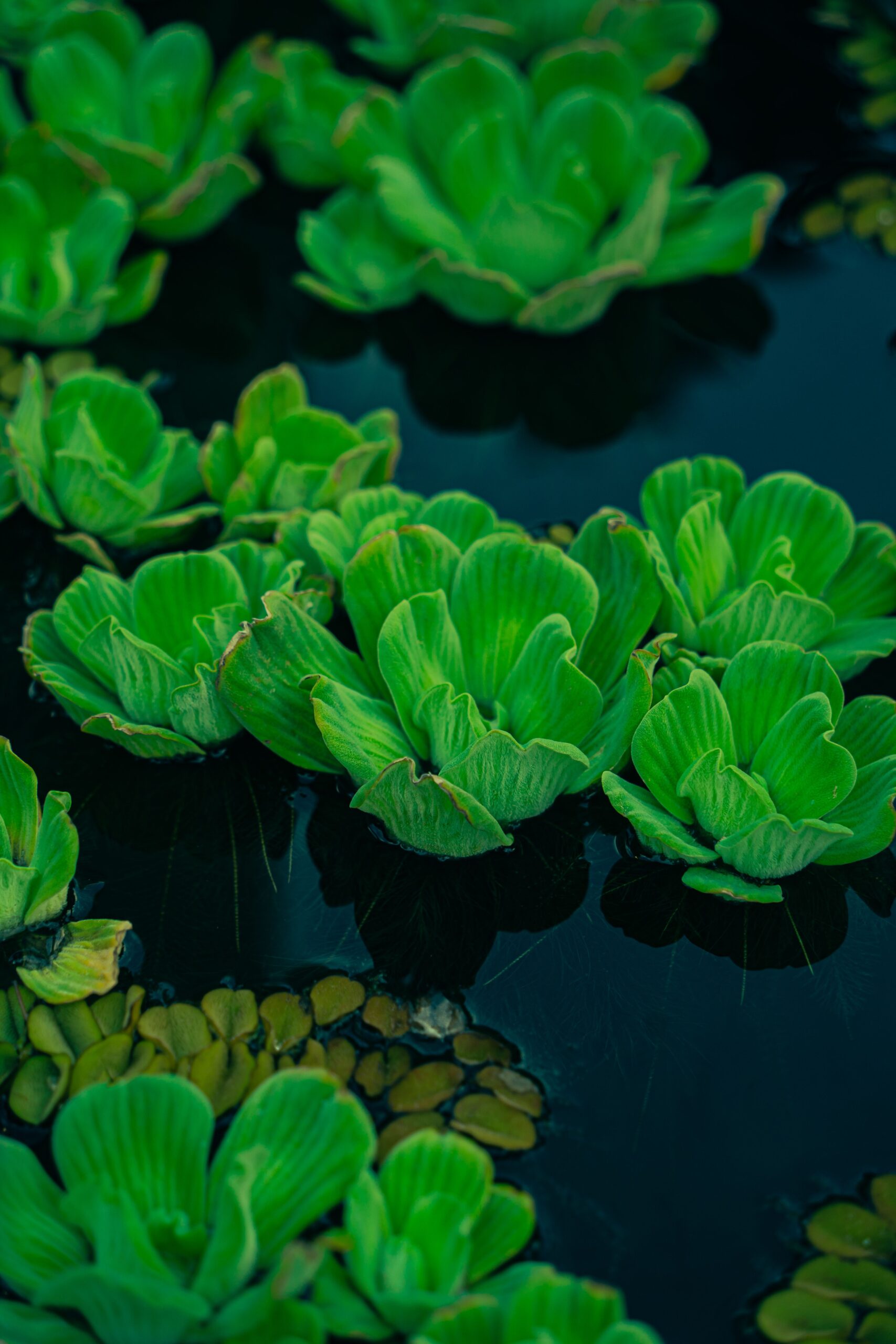
A floating aquatic plant grows on the surface of the water rather than being rooted into the bottom. Some have roots that hang freely in the water, absorbing nutrients directly from their surroundings.
Floating plants can provide shade, shelter and resting areas for fish. They may also help reduce the amount of light reaching the water, although excessive growth can cover the surface and interfere with gas exchange.
Popular examples include:
- Duckweed: A tiny floating plant that reproduces rapidly.
- Amazon frogbit: A floating plant with rounded leaves and dangling roots.
- Salvinia: A floating fern with small leaves that form surface clusters.
- Azolla: A small floating fern commonly found in freshwater environments.
Important: Floating plants can multiply quickly. Regularly remove excess growth to prevent them from covering the entire water surface and blocking light from plants below.
3. Floating-Leaved Aquatic Plants
Floating-leaved plants are rooted in the bottom substrate but develop leaves that reach and spread across the water surface. They are especially common in garden ponds and natural freshwater habitats.
Water lilies and lotus plants are well-known examples. Their broad leaves provide shade and can create resting places for insects and other aquatic organisms.
Unlike free-floating plants, these varieties remain attached to the substrate through their roots or underground stems.
4. Emergent Aquatic Plants
Emergent aquatic plants grow in shallow water or saturated soil. Their roots and lower stems remain underwater, while most of their leaves and flowers extend into the air.
These plants are commonly used around pond edges and wetland gardens. Their roots can help stabilize shoreline soil, while their foliage creates shelter for wildlife.
Examples include:
- Cattails
- Arrowhead plants
- Bulrushes
- Pickerelweed
Best Aquatic Plants for Aquarium Setups
Choosing aquarium plants depends on your tank size, lighting, fish species and experience level. Some plants are relatively easy to maintain, while others require more careful attention to water conditions and nutrients.
Here are several popular aquarium plants to consider when creating a natural freshwater tank.
1. Anubias
Anubias is one of the most popular choices for freshwater aquariums. It has thick, dark green leaves and grows relatively slowly. It can attach to driftwood and rocks, making it useful for aquascaping.
It generally prefers low to moderate lighting and does not require a nutrient-rich substrate. Its rhizome should not be buried because doing so can cause it to rot.
2. Java Fern
Java fern is another beginner-friendly aquarium plant. It produces long green leaves and can grow attached to driftwood, rocks and other aquarium decorations.
It does not need to be planted deeply in aquarium soil. Instead, attach its rhizome to a suitable surface and allow its roots to develop naturally.
3. Amazon Sword
Amazon sword is known for its broad, attractive leaves and can become a striking centrepiece in a freshwater aquarium. It grows from a rooted base and generally benefits from nutrient-rich substrate.
Because it can become relatively large, it is better suited to medium or larger aquariums rather than very small tanks.
4. Hornwort
Hornwort is a fast-growing submerged aquatic plant with thin, branching leaves. It can be left floating or loosely anchored in an aquarium.
Its dense foliage provides hiding places for small fish and can help absorb excess nutrients from the water. Regular trimming may be necessary to prevent it from taking over the tank.
5. Java Moss
Java moss is a versatile aquatic plant that creates a soft, green appearance on aquarium decorations. It can attach to rocks, driftwood and mesh surfaces.
It is frequently used to create natural-looking aquascapes and provide shelter for small fish and shrimp.
6. Vallisneria
Vallisneria is a grass-like aquatic plant with long, ribbon-shaped leaves. It is often placed toward the back of an aquarium because its leaves can grow tall and create a natural background.
It spreads through runners and can gradually produce a dense underwater planting area.
| Plant | Light requirements | Growing difficulty |
|---|---|---|
| Anubias | Low to moderate | Easy |
| Java fern | Low to moderate | Easy |
| Amazon sword | Moderate | Easy to moderate |
| Hornwort | Low to moderate | Easy |
| Java moss | Low to moderate | Easy |
| Vallisneria | Moderate | Easy to moderate |
Benefits of Aquatic Plants
Aquatic plants do more than make an aquarium or pond look attractive. They contribute to the natural functioning of freshwater environments and can support aquatic life in several ways.
1. Support Oxygen Production
During photosynthesis, aquatic plants use light energy to convert carbon dioxide and water into sugars, releasing oxygen as a by-product. This contributes to oxygen levels in the water when light is available.
However, plants also respire and consume oxygen, particularly when there is no light. They should not be considered a replacement for proper aquarium filtration, aeration or water circulation.
2. Provide Shelter for Fish
Dense aquatic vegetation creates hiding places for small fish, fry, shrimp and other aquatic organisms. It can help reduce stress by providing areas where fish can retreat from open spaces.
3. Absorb Excess Nutrients
Many aquatic plants absorb nutrients such as nitrogen and phosphorus from the water or substrate. This can help limit the availability of nutrients that contribute to unwanted algae growth.
However, aquatic plants alone cannot maintain water quality. Regular aquarium maintenance and appropriate filtration are still important.
4. Improve Aquarium Appearance
Green aquatic vegetation adds colour, texture and depth to an aquarium. Different leaf shapes and growth patterns can help create a natural underwater landscape.
5. Support Aquatic Ecosystems
In natural water bodies, aquatic plants provide food, shelter and breeding habitats for many organisms. They can also help stabilize bottom sediments and support biodiversity.
How to Grow Aquatic Plants in an Aquarium
Growing aquatic plants is easier when you understand the basic requirements of your chosen species. Before planting, consider the aquarium size, available lighting, water conditions and the type of substrate required.
Step 1: Choose the Right Plants
Start by selecting plants that match your aquarium conditions. Anubias, Java fern and Java moss are useful starting choices for beginners because they do not require complicated planting techniques.
Check whether the plant is fully aquatic or only suitable for growing with its roots submerged. Not every plant sold near an aquarium is suitable for permanent underwater growth.
Step 2: Prepare the Aquarium
Clean the aquarium and arrange the substrate, rocks and driftwood before adding your plants. Avoid using garden soil or outdoor materials that may introduce pesticides, fertilizers or unwanted organisms.
Use aquarium-safe materials and make sure the substrate is appropriate for the plants you intend to grow.
Step 3: Plant or Attach Your Aquatic Plants
Different plants require different planting methods.
- Rooted plants such as Amazon sword should be planted in suitable aquarium substrate.
- Anubias and Java fern can be attached to rocks or driftwood.
- Floating plants can be placed gently on the water surface.
- Java moss can be secured to aquarium decorations.
Step 4: Provide Suitable Lighting
Light is essential for photosynthesis and healthy aquatic plant growth. Choose aquarium lighting according to the plant species and tank conditions.
Many beginner-friendly plants grow under low to moderate lighting. More demanding carpeting plants may need stronger light and additional care.
A consistent lighting schedule of around 6 to 8 hours per day is a reasonable starting point for many planted aquariums. Adjust it according to plant growth and algae development.
Step 5: Maintain Water Quality
Healthy aquatic plants need stable water conditions. Monitor temperature, pH and other relevant water parameters based on the requirements of your plants and fish.
Use an appropriate aquarium filter, perform regular partial water changes and avoid adding too many fish to the tank.
Aquatic Plant Soil: What Should You Use?
Aquatic plant soil, often called aquarium substrate, provides support for rooted plants and can supply nutrients needed for growth. The right choice depends on the type of aquatic plants you are growing.
Some plants feed heavily through their roots, while others absorb many nutrients directly from the water column.
| Substrate type | Common use |
|---|---|
| Aquarium soil | Rooted plants and nutrient-demanding aquarium setups. |
| Fine gravel | Anchoring many rooted aquarium plants. |
| Sand | Suitable for certain rooted plants, depending on grain size and nutrient availability. |
| Inert substrate | Plants that receive nutrients through the water or added root fertilizers. |
For plants such as Amazon sword, a nutrient-rich substrate or root tabs can be helpful. Plants such as Anubias and Java fern do not need to be buried in aquarium soil.
Important tip: Never assume ordinary garden soil is safe for an aquarium. It may contain chemicals, excessive organic matter or substances that can affect water quality.
Aquatic Plant Fertilizer: Do Water Plants Need Feeding?
Yes, many aquarium plants benefit from additional nutrients, especially when they are growing in nutrient-poor substrates or heavily planted tanks.
Aquatic plant fertilizers may contain nutrients such as nitrogen, phosphorus, potassium and trace elements. The amount needed depends on plant species, lighting, fish population and existing nutrient levels.
Types of aquatic plant fertilizers
- Liquid fertilizers: Added to aquarium water to supply nutrients absorbed through plant leaves and other tissues.
- Root tabs: Placed in the substrate to provide nutrients to rooted plants.
- All-in-one fertilizers: Products designed to supply several essential nutrients in one formulation.
Always follow the product instructions and choose fertilizers suitable for aquariums containing fish or shrimp. Avoid excessive dosing because too many nutrients can contribute to algae problems or harm sensitive aquatic life.
How to Care for Aquatic Plants
Aquatic plant care involves maintaining suitable light, water conditions, nutrients and healthy growing space. Although many aquarium plants are relatively easy to maintain, they still need regular observation.
| Care requirement | What to do |
|---|---|
| Lighting | Provide consistent lighting appropriate for the species. |
| Water quality | Monitor water parameters and perform regular partial water changes. |
| Temperature | Follow the temperature requirements of the specific species and aquarium inhabitants. |
| Substrate | Use suitable aquarium soil, gravel or another appropriate growing medium. |
| Fertilizer | Supply nutrients when necessary and avoid overfertilizing. |
| Pruning | Remove damaged leaves and trim plants when they become overcrowded. |
| Water movement | Maintain suitable circulation without creating excessive currents for delicate plants. |
How often should you trim aquatic plants?
There is no single trimming schedule for all aquatic plants. Fast-growing species such as hornwort may need frequent trimming, while slow-growing plants such as Anubias require much less attention.
Use clean aquarium-safe scissors to remove damaged leaves, control excessive growth and maintain enough open space for water movement.
Can Aquatic Plants Grow in Ponds?
Yes. Many aquatic plants grow naturally in garden ponds and larger freshwater environments. Some are completely submerged, while others float on the surface or grow along the pond edges.
Aquatic plants for ponds can provide shade, shelter and visual interest. However, their size, growth rate and suitability for your local climate should be considered before planting.
Popular aquatic plants for ponds
- Water lilies: Known for their broad floating leaves and attractive flowers.
- Lotus: A beautiful aquatic plant with large leaves and distinctive flowers.
- Duckweed: A small floating plant that can spread quickly.
- Arrowhead: An emergent plant commonly grown in shallow pond areas.
- Hornwort: A submerged plant that can grow in suitable pond conditions.
Choose pond plants carefully and check whether a species is native or invasive in your area. Some aquatic plants can spread rapidly and become difficult to control.
Common Problems When Growing Aquatic Plants
Even healthy aquarium setups can experience plant growth problems. Recognizing the cause early can help prevent further damage.
| Problem | Possible cause | What to do |
|---|---|---|
| Yellow leaves | Nutrient deficiency, old leaves or unsuitable water conditions. | Check plant needs and water parameters. |
| Brown or damaged leaves | Plant adjustment, damage or unsuitable growing conditions. | Remove badly damaged leaves and review care. |
| Slow growth | Insufficient light, nutrients or unsuitable conditions. | Check lighting and nutrient availability. |
| Excessive algae | Imbalanced lighting and nutrient availability. | Adjust lighting and improve maintenance. |
| Melting leaves | Transition from emersed to submerged growth or environmental changes. | Remove decaying leaves and monitor new growth. |
| Rotting roots or rhizomes | Incorrect planting depth or unhealthy conditions. | Check planting technique and remove rotting material. |
Are All Aquatic Plants Suitable for Fish Tanks?
No. Not every aquatic plant is suitable for a home aquarium. Some species are too large, grow too quickly or require conditions that cannot be maintained in a small tank.
Some plants sold as aquarium decorations are actually marginal or terrestrial plants that cannot survive completely submerged for long periods.
Before purchasing an aquatic plant, check its scientific name, mature size, growth requirements and compatibility with your fish or other aquarium inhabitants.
Frequently Asked Questions About Aquatic Plants
What are five examples of aquatic plants?
Five examples include Anubias, Java fern, hornwort, duckweed and water lilies. These plants have different growth habits and are suitable for different freshwater environments.
What is the difference between aquatic plants and water plants?
Both terms generally describe plants adapted to growing in water or wet environments. Water plants is a more informal expression, while aquatic plants is the commonly used botanical and gardening term.
Which aquatic plants are best for beginners?
Anubias, Java fern, Java moss and hornwort are popular beginner-friendly choices. They generally require less demanding care than many high-light aquarium plants.
Do aquatic plants need soil to grow?
No. Some aquatic plants grow in nutrient-rich soil or aquarium substrate, while others can attach to rocks and driftwood or float freely. Their growing requirements depend on the species.
Do aquatic plants need fertilizer?
Some aquatic plants benefit from liquid fertilizers or root tabs, particularly when essential nutrients are limited. Fertilizer requirements depend on the plant species and aquarium conditions.
How to water plants in an aquarium?
Aquatic plants do not need to be watered like ordinary houseplants. They grow directly in water, so the important task is maintaining suitable water quality, temperature, nutrients and circulation. Rooted plants also need an appropriate growing substrate when their species requires it.
Can aquatic plants grow without sunlight?
Aquatic plants need light for photosynthesis, but they do not necessarily need direct sunlight. Suitable aquarium lighting can provide the light required for healthy growth. Excessive direct sunlight may encourage unwanted algae.
Do aquatic plants produce oxygen?
Yes. Aquatic plants release oxygen during photosynthesis when light is available. However, they also consume oxygen through respiration, so an aquarium still needs suitable filtration and aeration.
Can aquatic plants survive in freshwater?
Yes. Many popular aquarium plants, including Anubias, Java fern, Vallisneria and hornwort, are freshwater species. Always check the water requirements of the individual plant.
What is the fastest-growing aquatic plant?
Duckweed and some floating aquatic plants are known for rapid reproduction under favourable conditions. Hornwort is another fast-growing choice often used in freshwater aquariums.
Are aquatic plants good for fish?
Many aquatic plants provide shelter, resting areas and natural habitat for fish. Some fish also feed on plant material. However, plant compatibility depends on the fish species and aquarium setup.
Final Thoughts on Growing Aquatic Plants
Aquatic plants bring life, colour and natural beauty to aquariums, ponds and freshwater environments. From submerged plants such as hornwort and Vallisneria to floating varieties such as duckweed and Amazon frogbit, there are many options for different growing conditions.
The best results come from choosing suitable species, understanding their growth habits and maintaining consistent water quality. Beginners can start with easy-care aquarium plants such as Anubias and Java fern before experimenting with more demanding varieties.
Whether you call them water plants, aquarium plants or 水草, these fascinating plants are an important part of freshwater environments. With the right knowledge and care, you can enjoy a healthy and attractive underwater garden.
Protect natural waterways: Never release unwanted aquarium plants into rivers, lakes, ponds or other natural waterways. Some species can become invasive and damage local ecosystems. Dispose of unwanted plants responsibly and follow local guidance.
Love Learning About Plants?
Explore more plant care guides, growing tips and helpful information to make your indoor and outdoor plants healthier.
Sources and Further Reading
- Penn State Extension: Aquatic Plants and Algae
- University of Florida IFAS: Freshwater Ornamental Aquatic Plant Production
- Texas A&M: Aquatic Plant Identification
- Michigan Invasive Species Program: Prevention and Disposal Guidance
This article is for general educational purposes. Always check local regulations and species-specific growing requirements before introducing aquatic plants into an aquarium or pond.
0 Comments